
Diwali cleaning is the one week of the year when the photo frames come off the wall, the clock gets taken down for a new battery, and someone finally climbs up to wipe the top of the split AC. It's also when families find out where the chhipkali (छिपकली) has been living: black droppings behind the frame, a pair of small white eggs in the gap above the AC, or the lizard itself, darting out from behind the calendar.
None of this means the house is dirty. It means those gaps are the best spots in the home for a lizard, and they haven't been disturbed for a year. Here is how to clean them, what to do with what you find, and how to have fewer lizards next year.
What Diwali cleaning turns up, and what it means
House lizards in Delhi NCR homes are geckos. They rest by day in tight, dark gaps and come out at night to hunt insects near lights. Texas A&M AgriLife's fact sheet on house geckos notes that they wait near lights for moths and other insects, shelter in cracks and crevices, and lay their eggs in pairs in protected spots.
| What you find | Where you usually find it | What it means |
|---|---|---|
| Small dark droppings with a white tip | Behind frames, on top of the AC, on window sills | A lizard rests there regularly |
| Pairs of white, round eggs, about pea-sized | Behind frames, in AC gaps, inside wall-clock backs, behind the fridge | A female has laid there; more may be nearby |
| Papery shed skin | Behind curtains and pelmets | A lizard is growing in that spot |
| The lizard itself | Anywhere warm and dark | It's settling in for the cooler months |
Swipe to see the whole table
As nights cool down in late October, lizards spend more time in warm spots, such as the gap behind a fridge or above an AC unit that was running all summer.
Before you start: gloves, a torch, a jar and a card
You need disposable gloves, a phone torch, a damp cloth, a household disinfectant, a few sealable plastic bags, a clear jar or plastic container and a stiff card. Keep children and pets in another room while you work on the high spots.
Lizard droppings aren't just a stain problem. The US CDC warns that geckos and other reptiles can carry Salmonella germs in their droppings even when they look healthy, and advises that children under 5 shouldn't touch reptiles or the places they live (CDC). That's why gloves go on before the frames come down.
Step by step: cleaning the lizard spots, room by room
Work one wall at a time, from the top, and keep the jar and card within reach. Allow about 10 minutes per frame-heavy wall and 15 minutes per AC.
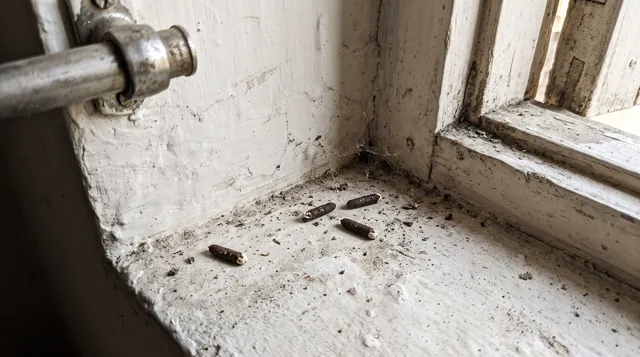
Photo frames, wall clocks and calendars
- Lift each frame straight off the nail, holding it away from your face. Lizards usually move only when disturbed, and they head for the next dark gap.
- Check the back of the frame and the wall behind it with the torch. Droppings, eggs and shed skin tend to be in the top corners.
- Pick up droppings and eggs with a damp paper towel and put them straight into a sealable bag.
- Wipe the wall and the frame back with a cloth and disinfectant, then let both dry before rehanging.
- Rehang frames flush. A small felt or rubber pad at each bottom corner keeps the frame at an even distance, but don't leave a 1 to 2 cm gap at the top. That's exactly the gap lizards use.
Split AC indoor units and window AC gaps
- Switch the AC off at the switch.
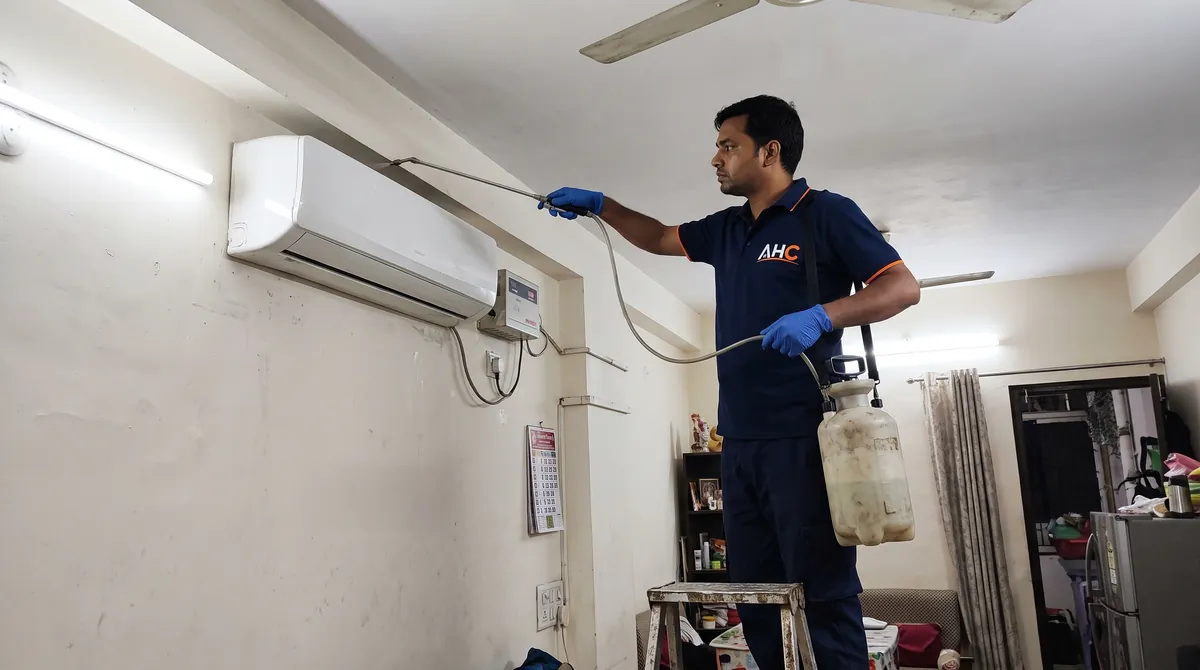
- Shine a torch into the gap between the top of the unit and the wall, and behind the unit where the pipes go through. It's one of the first spots our technicians check on lizard visits.
- Wipe out droppings and eggs with a damp cloth on a stick or a thin duster.
- Check the hole where the copper pipes go through the wall. If it isn't sealed with putty or foam, it's an entry point from outside. Ask your AC technician to seal it at the next service.
- For window ACs, check the gap between the sleeve and the wall, and seal it with weather strip or foam.
Pelmets, curtain rods, behind the TV and the fridge
- Take curtains down and check the top of the pelmet or rod bracket.
- Pull the TV unit forward and check behind the TV and the set-top box, which stay warm.
- Pull the fridge out and wipe behind it and around the compressor, which is warm all year.
- Check behind the mirror in the bathroom and the kitchen exhaust fan.
If you find a lizard: getting it out without hurting it
Stay calm and let it settle. A lizard that is chased drops its tail and disappears into a new gap.
- Open the nearest window or balcony door fully, and switch off the light near it if it's evening.
- Place a clear jar over the lizard when it stops on a flat surface.
- Slide the stiff card under the rim, keeping it pressed to the wall.
- Carry it outside, to a balcony plant or a terrace corner, and release it.
Don't use glue boards. Texas A&M's fact sheet points out that glue traps don't kill quickly and don't allow a humane release. A lizard stuck on a glue board suffers for hours or days, and the board ends up on a wall near your family. Don't spray shop insect spray on it either; it won't kill a lizard quickly and you'll be wiping spray off your walls.
Eggs and droppings: how to clean them up safely
- Eggs: pick them up with a damp paper towel, seal them in a bag and put it in the dustbin outside. Then check nearby gaps, because a female often lays more than one pair over the summer.
- Droppings: soften dried ones with a damp paper towel, lift them off, then wipe the spot with disinfectant. On fabric, such as curtains or a sofa back, wash at the warmest temperature the fabric allows.
- Afterwards: wash your hands with soap and water, even if you wore gloves, before you touch food. If a child has handled droppings or a lizard, wash their hands straight away too.
How to get rid of lizards for longer: fewer insects, fewer gaps
Lizards come inside for food. Cut the food and the gaps, and you'll see far fewer. On our visits, the homes with the most lizards usually have the most insects around their lights.
- Fewer insects at the lights. Switch off balcony and window lights you don't need after dark, and use warm-coloured bulbs outside, which attract fewer insects.
- Fewer cockroaches and ants. A kitchen with cockroaches feeds lizards. If you're seeing both, cockroach control helps with both.
- Fewer gaps. Mesh on windows, weather strip on balcony doors, sealed AC pipe holes and a door sweep on the main door.
- Less clutter in the gaps. Calendars, frames and boxes stacked against walls give lizards new homes.
Peacock feathers, eggshells and naphthalene balls don't have any reliable effect. Texas A&M also notes that geckos eat insects, so some people simply leave a lizard or two alone. For most Indian families, especially with small children, fewer is the goal.
When to call a professional, and what AHC's lizard control includes
DIY works well for the cleaning and the occasional lizard. Call us when lizards keep dropping from the kitchen exhaust or ceiling corners, someone at home is very frightened of them, or you're finding droppings in many rooms.
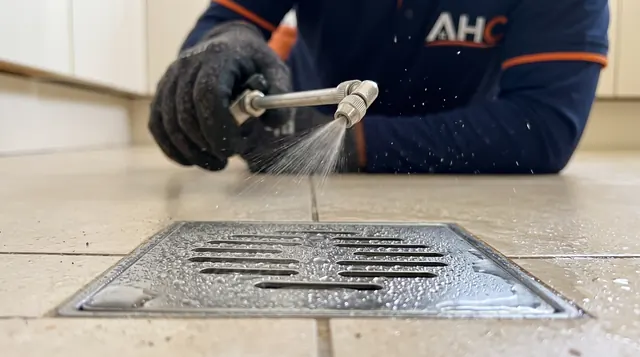
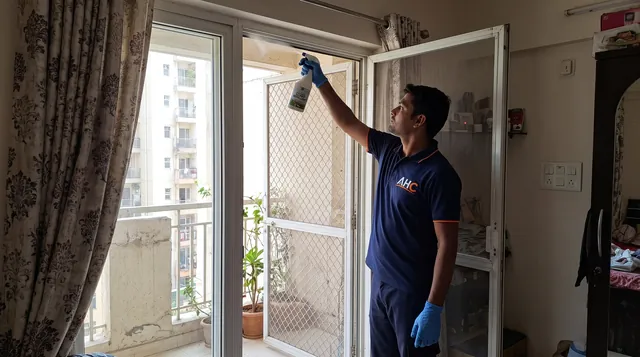
Our lizard control visit takes about 30 to 45 minutes. The technician inspects windows, doors, the exhaust and ceiling corners, then applies a repellent treatment along window frames, door edges, the exhaust area and the corners near lights where lizards rest, not across open walls. The product used is shared with you on WhatsApp.
| Service | 1RK | 2BHK | 3BHK |
|---|---|---|---|
| Lizard control, inclusive of all taxes | ₹1,099 | ₹1,549 | ₹1,849 |
| General pest control (includes lizards, cockroaches, ants and more), inclusive of all taxes | ₹1,099 | ₹1,549 | ₹1,849 |
Swipe to see the whole table
To be honest about the result: lizard treatment reduces numbers, but lizards can come back in from outside, so there's no warranty on it. If cockroaches and ants are also around, general pest control covers them in the same visit. If there's a baby or a pregnancy at home, read our guide to pest control safety and tell us when you book.
Sources
Need this done?