It usually starts with a red, scraped spot near a toddler's lip in the morning, and a cockroach seen near the cot the night before. Was it a bite? Parents ask us this more often than you might think, usually with a photo attached. The honest answer is that cockroach bites are possible but rare, and that the real health risks from cockroaches in Delhi NCR kitchens are quieter ones: allergens in the dust and germs on the food.
Here are the questions people ask most, answered as plainly as we can. This is general information, not medical advice; for anything that worries you about a bite, see a doctor.
Can cockroaches bite humans?
Yes, but it is uncommon. Cockroaches have chewing mouthparts, not the piercing ones that mosquitoes and bed bugs use to draw blood, and they are not aggressive towards people. They eat almost anything, though, and in a very heavy infestation, with too many cockroaches and too little food, they have been recorded gnawing at human skin.
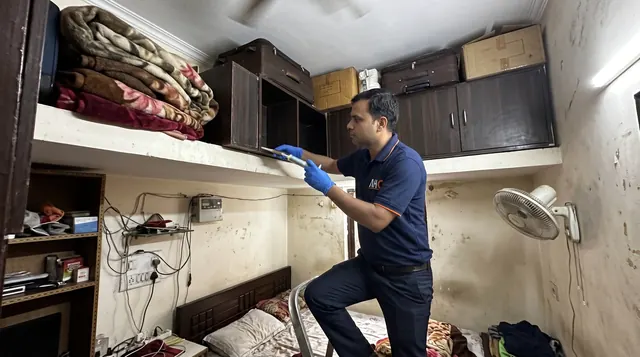
The classic review of the subject, *The Medical and Veterinary Importance of Cockroaches* by Roth and Willis (Smithsonian Institution, 1957), collects reports going back to the 1700s: cockroaches nibbling the fingernails and toenails of sailors, gnawing calluses on the feet of a sleeping crew, biting the greasy fingers of sleeping children, feeding on dried milk at the corner of an infant's mouth, and in one Brazilian house biting off the eyelashes of about a dozen children. The authors also note that many of these accounts were not directly observed, and that biting is mostly limited to places with poor sanitation and very heavy infestations (Roth and Willis).
In the homes we treat across Delhi NCR, bites are almost never the reason for the call. Cockroaches in the kitchen, the bathroom drain and the microwave are.
Why would a cockroach bite someone?
Food, not blood. A cockroach is drawn to food residue, sweat and dead skin, so a bite is most likely:
- on a sleeping baby or young child with milk or food around the mouth or on the hands
- on an elderly or bedridden person who can't brush a cockroach away
- in a home where cockroaches are so many that they come out in daylight and climb onto beds
What does a cockroach bite mark look like?
A cockroach bite usually looks like a small red, raised or scraped spot, often with a scab or crust as it heals. In one experiment described by Roth and Willis, the bitten areas were covered with scabs and caused slight pain and itching at first (Roth and Willis). You can't tell for certain from the mark alone. What points to a cockroach is the setting: live cockroaches on the bed or cot, food crumbs nearby, and no other bites.
| Cockroach bite (rare) | Bed bug bites | Mosquito bites | |
|---|---|---|---|
| Pattern | Usually a single spot | Often three or four in a line or tight cluster | Scattered |
| Where | Around the mouth, fingers, nails, feet | Arms, neck, shoulders, legs | Any uncovered skin |
| When noticed | After sleep | In the morning | Evening and night, also in the day |
| What else you see | Cockroaches on or near the bed | Dark spots on mattress seams | Mosquitoes indoors |
Swipe to see the whole table
If it looks more like a row of bites, read about bed bug treatment rather than cockroaches.
Cockroach ke katne se kya hota hai?
Usually very little. The reports collected by Roth and Willis describe slight pain, itching and a scab (Roth and Willis). The bigger concern is infection: the cockroach has walked through drains and dustbins, and NHS guidance warns that a scratched bite can get infected (NHS 111 Wales). A serious allergic reaction is also possible in people already sensitive to cockroaches (University of Nebraska–Lincoln). If a bite is getting worse rather than better, see a doctor.
What should I do about a cockroach bite, and when should I see a doctor?
Wash the spot with soap and clean water, keep it clean and try not to scratch. The NHS 111 Wales guidance on insect bites says washing with soap and water lowers the chance of infection, that a pharmacist can advise on medicines to ease the symptoms, and that scratching can let a bite become infected.
Get an urgent doctor's appointment if, in the words of that NHS guidance:
- your symptoms get worse or are not getting better
- a large area around the bite becomes red and swollen
- you have a high temperature and swollen glands (NHS 111 Wales)
Get emergency help straight away for signs of a serious allergic reaction: sudden swelling of the lips, mouth, throat or tongue, a tight throat, or trouble breathing or swallowing (NHS 111 Wales).
We would also suggest showing a doctor any bite on a baby, a bite near the eye, or a sore on an elderly or bedridden person that isn't healing.
Are cockroaches dangerous? The bigger risk is allergens and asthma
For most families, yes, cockroaches are a health risk, but not because of bites. The University of California's IPM programme notes that indoor cockroach infestations are a source of allergens and have been identified as risk factors for the development of asthma in children (UC IPM). The allergens come from droppings, saliva, shed skins and dead cockroaches, which break down into the dust behind the fridge and under the sink.
The University of Nebraska–Lincoln's *Cockroach Management Manual* cites research finding that 23–60% of city dwellers with asthma are allergic to cockroaches (UNL Cockroach Management Manual). You don't need to see cockroaches every day for this dust to build up; a colony hidden in the hinges is enough.
Can cockroach allergy cause asthma in children?
Research links cockroach allergens with the development of asthma in children (UC IPM), and children in cockroach-infested homes have higher asthma rates (UNL). Only a doctor can say whether cockroaches are behind a child's symptoms. If a child at home has asthma, a cough at night or a constantly blocked nose, tell the doctor that there are cockroaches in the home. Clearing the infestation is part of reducing the allergen, and UC IPM suggests a HEPA or triple-filter vacuum for the droppings and skins left behind (UC IPM).
Do cockroaches spread germs through food?
They can carry them. UC IPM says cockroaches contaminate food and eating utensils, and that the American cockroach, the big reddish-brown one that comes up from drains, can carry bacteria that cause food poisoning, such as *Salmonella* and *Shigella* (UC IPM). The University of Nebraska manual notes that cockroaches have been implicated in carrying about 50 different microorganisms (UNL). That is a statement about what they carry on their bodies and in their droppings, not proof that every case of an upset stomach at home came from them.
| Where cockroaches walk | What they can pick up | What to do |
|---|---|---|
| Floor traps and drains | Sewage bacteria | Keep drain covers closed at night |
| Dustbin | Rotting food residue | Lidded dustbin, emptied every night |
| Kitchen slab and sink | Whatever is on their legs | Wipe the slab before cooking, dishes washed before bed |
| Open food | Droppings and saliva | Food in sealed steel or glass containers |
Swipe to see the whole table
Why treatment plus kitchen hygiene lowers the risk
Because neither works alone. UC IPM puts it plainly: good sanitation and exclusion are important, and pesticides alone will not solve cockroach problems (UC IPM). A clean kitchen without treatment still has a colony in the hinges; a treated kitchen with dishes in the sink overnight gives the survivors other food than the gel.
What helps most, in the order we usually suggest it:
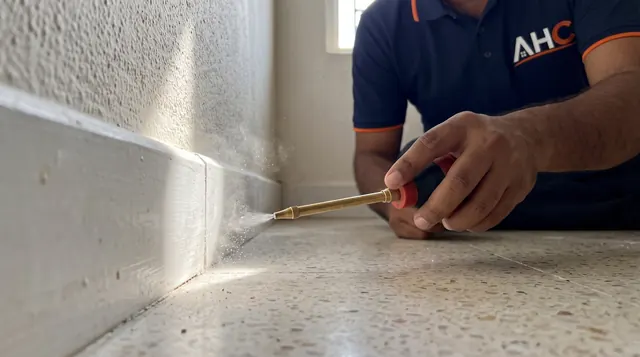
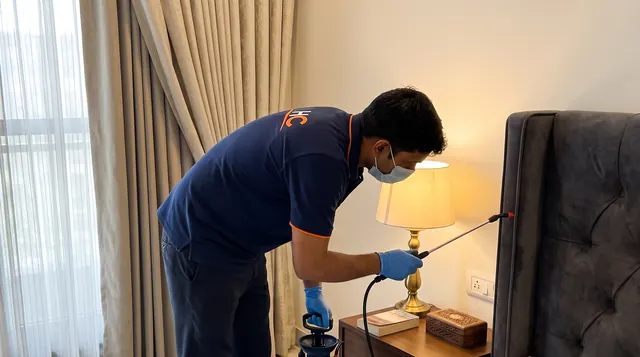
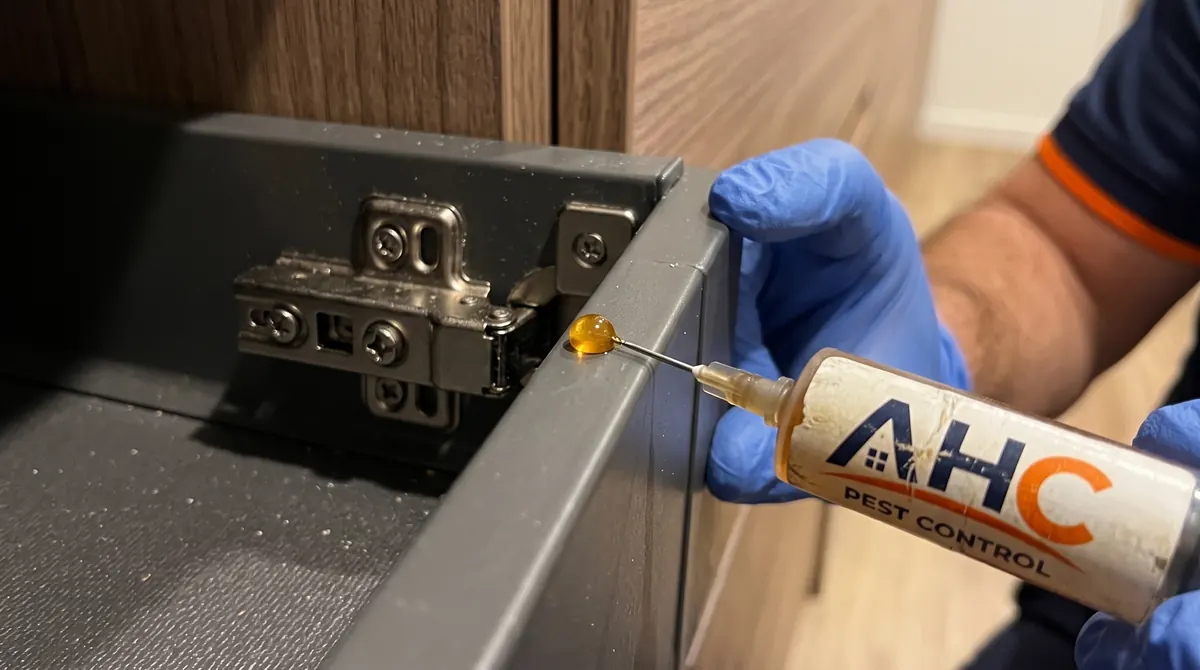
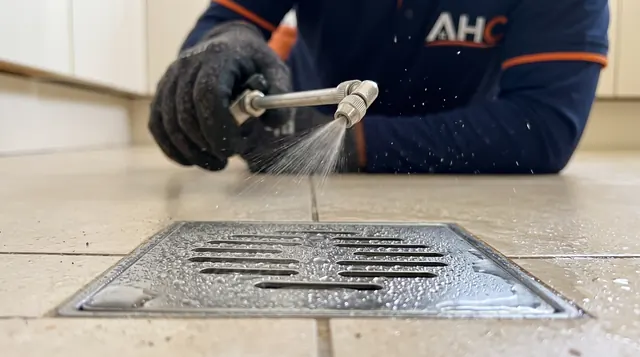
- Treat the hiding places. Odourless gel in hinge cups, drawer runners and the sink cabinet, and a residual spray in drains and pipe openings.
- Take away the other food. Wash dishes before bed, keep the dustbin lidded and wipe crumbs off the slab, so the gel is the only meal.
- Close the routes. Drain and floor-trap covers shut at night; ask your mason to seal gaps around pipes into the shaft.
- Stop shop sprays. They scatter cockroaches deeper into walls and make them avoid gel.
- Keep babies' things off the floor. Cots away from the wall, bottles washed and covered, no food left in the cot.
If they come back after a few weeks, it's usually eggs hatching or cockroaches walking in from a neighbour's flat; we explain both in why cockroaches come back after pest control.
When to call a professional, and what AHC's cockroach treatment includes
Call when you see cockroaches in daylight, find them in a cot or bed, see droppings like ground pepper in drawers, or still see them after two weeks of the steps above. For a home with a baby or someone with asthma, don't wait that long.
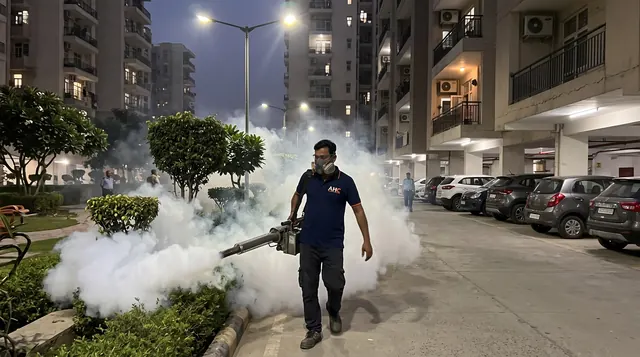
AHC's cockroach control puts odourless gel in hinges, drawer runners and appliance gaps, and treats drains and duct openings. Nothing in the kitchen is emptied and you can cook the same evening. It costs ₹999 for a 1RK, ₹1,449 for a 2BHK and ₹1,649 for a 3BHK, inclusive of all taxes. Cockroaches are covered by a 30-day warranty*. Seeing ants and spiders as well? General pest control covers them in the same visit, ₹1,549 for a 2BHK. For a newborn or pregnancy at home, our guide for parents explains how we plan the visit around them.
Sources
Need this done?