Chhath (छठ) in Delhi NCR means water everywhere it doesn't usually sit: buckets filled for the Nahay Khay bath, drums kept aside for cooking prasad, a plastic tub or a small cemented kund on the terrace for families who can't reach a ghat, and in many societies a temporary pond built in the park. In 2023, Tribune reported that the Delhi government had set up more than 1,000 Chhath ghats, including artificial ponds, while Gurugram's administration marked 54 sites.
This year Chhath falls from 13 to 16 November, at the tail end of dengue season. The mosquito that spreads dengue, Aedes, likes exactly this kind of water: clean, still and left for a few days. This checklist is about keeping the puja water pure and the mosquitoes out, without asking anyone to cut a ritual short.
Why is Chhath week a mosquito risk?
Chhath is a risk because it puts clean water in open containers for about a week, and that is how long Aedes needs. The Health Ministry's National Center for Vector Borne Diseases Control (NCVBDC) puts the egg-to-adult cycle at about 7 to 8 days, which is why it recommends checking for breeding every week. Its handbook lists coolers, drums, barrels, pitchers, cement tanks and overhead tanks among the usual breeding spots (NCVBDC).
Two more things make this week matter:
- Eggs survive dry spells. NCVBDC says Aedes eggs stuck to a container wall can survive dry for six months or more. A tub that held water this week and is stacked away wet can hatch next season.
- Aedes bites by day. It breeds, feeds and rests indoors and around homes, according to the same handbook (NCVBDC). Families spend long hours at home cooking thekua and preparing the daura through the day.
November evenings are cooler, which slows mosquitoes down, but Delhi NCR afternoons are still warm enough for larvae to grow.
Before Nahay Khay (by 12–13 November)
- [ ] Clean and dry every container first. Scrub buckets, drums and tubs with a brush, especially along the inside wall at the water line, where eggs stick. Rinse and let them dry in the sun for a few hours.
- [ ] Fill only what you need for the first two days. Topping up later is better than filling a drum on day one and letting it stand.
- [ ] Cover every container. A tight lid is best. Where a lid isn't possible, tie a clean cotton cloth over the mouth; NCVBDC asks for well-fitted lids on all water storage.
- [ ] Check the overhead tank lid. If you're drawing extra water from the roof tank this week, make sure its lid is closed and the overflow pipe has a mesh.
- [ ] Empty the usual suspects. Cooler trays, flower vase water, plant saucers and the AC drip bucket. Our dengue season checklist goes through all seven spots we find most.
During the four days (13–16 November)
| Day | What's happening at home | Mosquito check |
|---|---|---|
| 13 Nov, Nahay Khay | Bath water, cooking water stored | All containers covered; nothing left uncovered overnight |
| 14 Nov, Kharna | Prasad cooking, more water drawn | Use the oldest stored water first; refill only what you'll use |
| 15 Nov, Sandhya Arghya | Terrace tub or society pond filled | Fill it the same day if you can, not the day before |
| 16 Nov, Usha Arghya | Morning arghya, then celebrations | Empty, scrub and dry everything by evening |
Swipe to see the whole table
- [ ] Look into each container once a day. Larvae are 2–8 mm wrigglers that move in jerks and hang head-down from the surface. Pupae look like tiny commas. If you see either, pour that water onto soil and scrub the container.
- [ ] Change the water in diya trays and flower bowls daily.
- [ ] Cover arms and legs during the afternoon prep, and use a mosquito net or window screens where people rest during the day.
- [ ] Keep doors shut or screened while the kitchen is busy in the evening.
After Usha Arghya: emptying puja water respectfully
Puja water can be emptied with respect and without leaving it to breed. Many families pour it at the base of a tulsi or other plant, into garden soil, or into the society's green patch.
- [ ] Terrace tubs and kunds: empty within a day of the morning arghya. Scrub the inside walls and leave them dry, upside down if they're portable.
- [ ] Drums and buckets: empty, scrub at the waterline, sun-dry for a few hours, store upside down or with a lid on.
- [ ] Sugarcane, banana leaves, coconut shells and soop: check them for trapped water before putting them away or giving them out. Coconut shells are on NCVBDC's list of common breeding spots.
- [ ] Clay pots and diyas: stack them dry. A clay pot that held water can keep eggs on its wall for months.
Society ponds and ghats: what to ask your RWA
Temporary ponds in parks and on podiums are the biggest single water body many societies have all year. If your RWA builds one, ask three things:
- [ ] Who drains it, and by when? Ideally within 24 hours of the morning ritual. A shallow pond left for a week is a breeding ground for the whole tower.
- [ ] Is the tarpaulin lining being lifted? Folds in plastic sheets hold water long after the pond is drained.
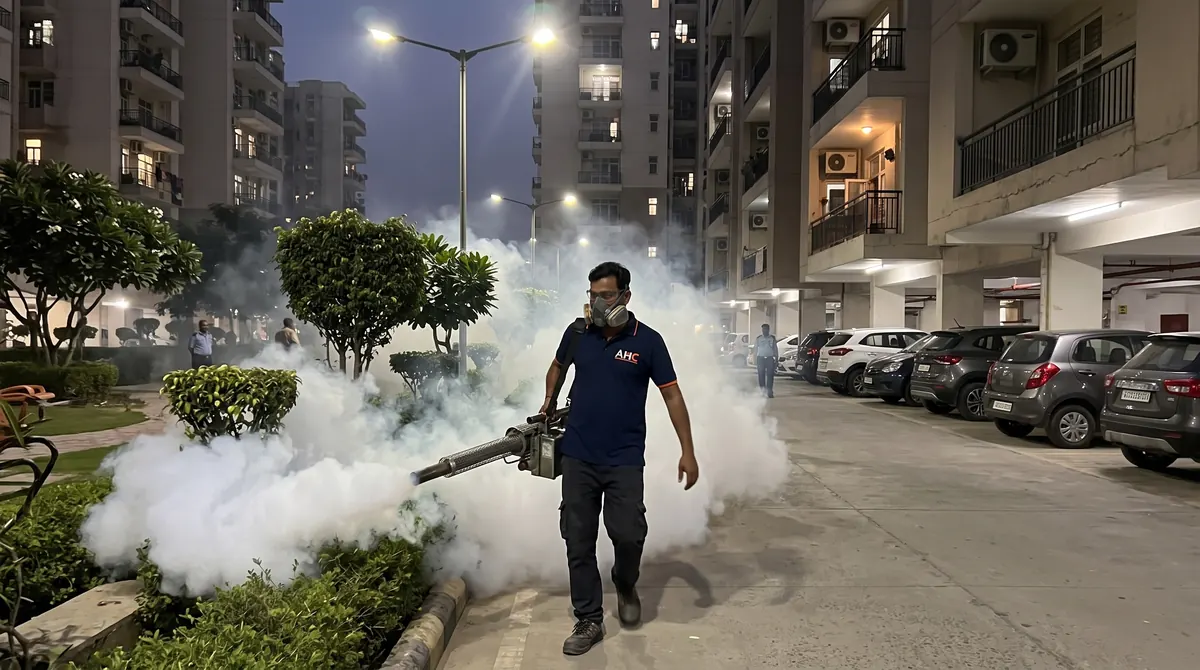
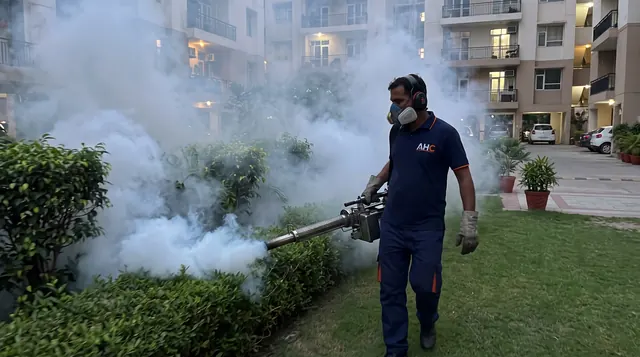
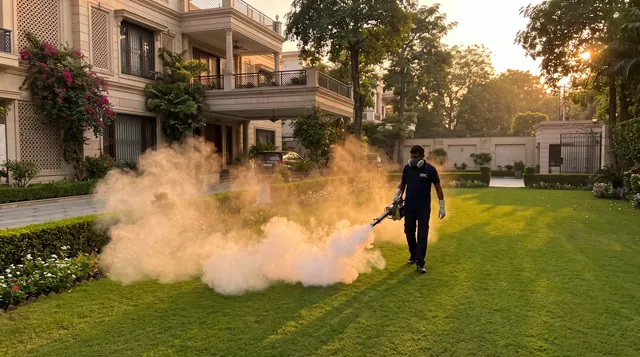
- [ ] Will the area be treated afterwards? Drains and low spots around the pond site can get a larvicide once the ritual is over; larvicide is never used in water for drinking, cooking or puja. Our fogging services can follow on the same day for the common areas; cold fogging for a home or block starts at ₹1,199 inclusive of all taxes.
Dengue signs: when to see a doctor
See a doctor for any high fever in this season, especially with a severe headache, pain behind the eyes, muscle or joint pain, nausea or a rash (WHO). The WHO lists warning signs that need urgent care: severe stomach pain, repeated vomiting, bleeding gums or nose, blood in vomit or stool, rapid breathing, and extreme tiredness or restlessness. These often appear as the fever is coming down, so don't relax when the temperature drops (WHO). Don't self-medicate. Fasting during Chhath makes it even more important to get a fever checked early. This is general information, not medical advice.
When to call a professional, and what our mosquito control includes
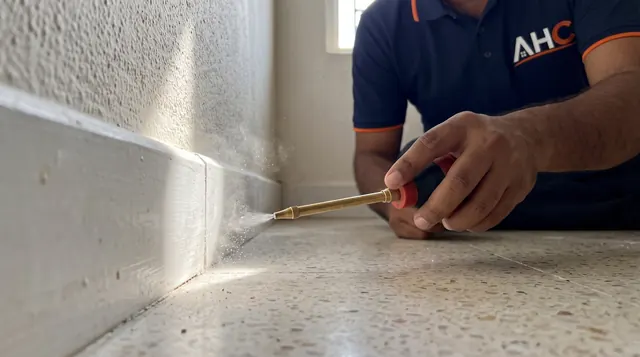
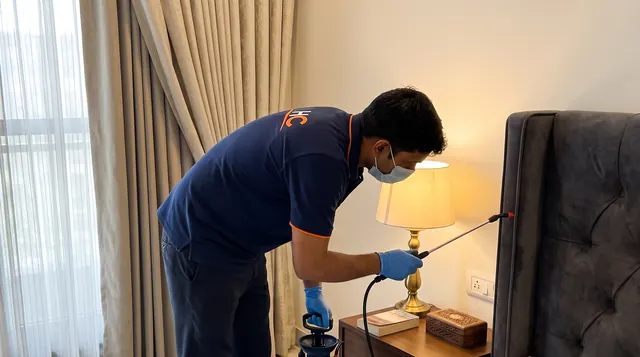
Call if you're still seeing mosquitoes indoors during the day after the containers are covered, if larvae keep turning up, or if your building has a drain, construction site or park pond nearby. Our mosquito control visit starts with a breeding-spot check of coolers, tanks, flower pots, AC trays and drains. The technician empties or covers what can be emptied, treats outdoor stagnant water with larvicide, and sprays indoor resting spots behind curtains, under beds and in dark corners. It takes about 45–60 minutes.
| Home size | Price (inclusive of all taxes) |
|---|---|
| 1RK | ₹1,449 |
| 2BHK | ₹1,899 |
| 3BHK | ₹2,299 |
Swipe to see the whole table
Mosquito treatment is an on-the-spot reduction: mosquitoes from outside your home can still come in. Puja and drinking water stays untouched: we don't put larvicide in it. The best protection this week is still the lid on the bucket.
Sources
Need this done?