Every Delhi NCR kitchen has a cockroach remedy someone's mother swears by: tej patta in the drawers, kapoor behind the gas cylinder, naphthalene balls in the sink cabinet, kerosene down the drain on Sunday. Most only move the cockroaches from one cabinet to the next, and a few are a real risk with a crawling baby or a dog at home.
We've seen the remains of most of these remedies on our visits since 2011. Here is each one checked against what entomologists and health agencies say.
Do cockroach home remedies work? The short verdict
Only one of the popular remedies kills cockroaches in a way that is backed by research, and even that one is slow. The rest only repel, and only for a while.
| Remedy | What people do | What it really does | Safe with children, pets, food? | Verdict |
|---|---|---|---|---|
| Boric acid (boric powder) | Dusted in corners, or rolled into balls with atta and sugar | A slow stomach poison when eaten or groomed off the legs | Low toxicity but not harmless; dough balls look like food to toddlers and dogs | Works slowly, only thin, dry and hidden |
| Baking soda with sugar | Sprinkled near the slab | No good evidence that it controls an infestation | Mostly safe | Doesn't work |
| Bay leaves (tej patta) | Placed in drawers and shelves | A faint smell; no evidence it repels an established colony | Safe | Doesn't work |
| Naphthalene balls | Kept in the sink cabinet or drain | Toxic vapour, labelled for moths | Harmful if eaten; risky for newborns and people with G6PD deficiency | Don't use in the kitchen |
| Camphor (kapoor) | Tablets behind the cylinder and in drawers | Strong smell; no residual action | Can cause seizures in small children | Don't use for pests |
| Kerosene or phenyl | Poured down drains, wiped on the floor | Kills only what it touches; no lasting effect | Kerosene is a fire and poisoning risk | Doesn't solve it |
Swipe to see the whole table
Boric acid for cockroaches: does it work?
The claim: a few balls of boric acid, atta and sugar wipe out the cockroaches.
What's true: boric acid is the one home remedy with solid evidence behind it. The University of California's IPM programme describes boric acid powder as a contact and oral insecticide: cockroaches walk through it, then swallow small amounts as they groom themselves. It is not repellent, and if it stays dry and undisturbed it keeps working for a long time (UC IPM).
Why it often disappoints: it is slow, and the way it is used in Indian kitchens works against it. UC IPM notes that thin films of dust work better than thick layers, and that a deposit that gets wet and then cakes loses its effect (UC IPM). A heap of powder on a wet floor near the sink, or a dough ball that dries hard, is avoided or ignored. And it does nothing to the eggs inside a German cockroach's egg case.
Safety: the US National Pesticide Information Center describes boric acid as low in toxicity, but people who have eaten it have had nausea, vomiting, stomach aches and diarrhoea, and in animals signs of poisoning can start within 2 hours of eating it (NPIC). A sweet atta ball on the kitchen floor is exactly what a toddler or a dog will pick up. If you use it at all: a thin dusting, dry, deep inside cracks and behind appliances, never as balls on open floor.
Kitchen-shelf remedies: baking soda and bay leaves
Both are harmless, and neither is pest control.
Myth: baking soda and sugar make cockroaches burst
The claim: cockroaches eat the sugar, the baking soda reacts with their stomach acid and they die.
What's true: we know of no published research showing baking soda controls a cockroach infestation. The sugar mostly becomes one more food source. It seems to work because people who try it usually clean the kitchen at the same time, and fewer crumbs means fewer cockroaches seen for a few days.
Myth: bay leaves keep cockroaches away
The claim: cockroaches hate the smell of tej patta (तेज पत्ता).
What's true: some plant oils have shown repellent effects in laboratory tests, but a dried leaf in a drawer releases very little, and a German cockroach colony lives inside the hinge cups and drawer runners, not on the shelf where the leaf sits. On our visits we often find live cockroaches in drawers lined with bay leaves.
Verdict: pleasant, but not pest control.
Smell remedies: naphthalene balls and camphor
These two do push cockroaches away for a while, and both carry real risks for small children.
Myth: naphthalene balls in the sink cabinet stop cockroaches
The claim: the smell of naphthalene ki goli drives cockroaches out of drains and cabinets.
What's true: naphthalene slowly turns into a vapour, and mothballs are made to be used against clothes moths in closed boxes and almirahs. In an open kitchen cabinet the vapour drifts into the room, near your food, and cockroaches simply move to the next gap.
Safety: NSW Health's fact sheet on naphthalene says very large exposures can damage blood cells, that this has been seen particularly in children who ate mothballs, that newborn babies are especially at risk, and that people with the inherited blood condition G6PD deficiency can show symptoms after even small amounts. It advises keeping mothballs well out of reach of small children and pets (NSW Health). If a child swallows one, go to a doctor straight away. Keep them out of the kitchen, and out of any room where a baby sleeps.
Myth: camphor (kapoor) tablets drive cockroaches out
The claim: a few kapoor tablets behind the gas cylinder keep cockroaches away.
What's true: camphor has a strong smell and no lasting effect. It doesn't reach the cockroaches in hinges and pipe gaps.
Safety: camphor is far more dangerous to small children than most people realise. A 2009 report in the journal *Pediatrics* described three children aged 15 to 36 months who had seizures from camphor; the exposures came from use as a cold remedy, for religious purposes, and for pest control (Pediatrics, 2009). Keep kapoor in the puja thali, in a closed box, out of a toddler's reach, and never in kitchen drawers for pests.
Kerosene or phenyl down the drain: does it end the problem?
The claim: a cup of kerosene or a strong phenyl wash in the drain kills the cockroaches coming up from it.
What's true: both kill only the cockroaches they soak. Neither leaves a lasting layer in the drain trap, so the American cockroaches further down the pipe come back once the smell fades. Phenyl is a floor disinfectant, not a cockroach treatment.
Safety: kerosene near a gas stove is a fire risk, and it is a well-known cause of poisoning in Indian children. A study of children in intensive care at PGIMER Chandigarh, published in *Indian Pediatrics*, found kerosene was the hydrocarbon swallowed in 85% of cases, with most of the harm coming from liquid getting into the lungs (Indian Pediatrics, 2006). Never store it in a drinking-water or soft-drink bottle.
Why most remedies scatter cockroaches instead of ending them
A remedy that only repels doesn't reduce the colony; it moves it. Cockroaches pushed out of one cabinet settle in the next, inside the fridge motor or the microwave casing, or in the neighbour's kitchen through the shaft, and come back when the smell fades. UC IPM says the same of shop aerosol sprays: they don't give long-term control and may repel and disperse cockroaches to other areas of the building (UC IPM).
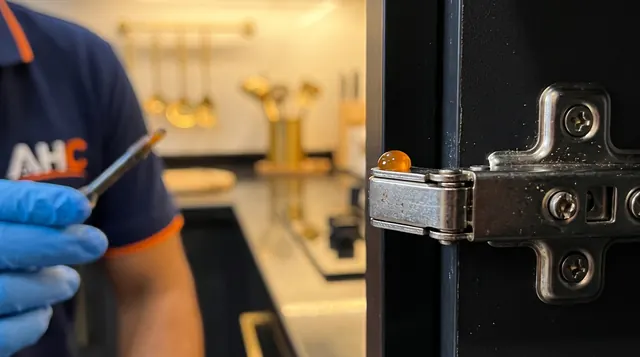
What works differently is bait. Cockroaches eat gel because it smells like food, carry it back to the crack and pass it to the others there, including the young ones that never come out. A repellent sprayed or placed near the gel stops them eating it, which is why we ask people to stop all home remedies and shop sprays for about a week before a treatment.
When DIY stops working
Home steps are worth doing, but they have a limit. It's time to call a professional when:
- you see cockroaches in the daytime, which usually means the hiding places are full
- you find them inside the microwave, the mixer base, the router or a switchboard
- small brown egg cases or pepper-like droppings turn up in drawers
- there's a baby, a pregnancy, someone with asthma or a pet at home
- two weeks of clean-up, closed dustbins and drain covers haven't changed what you see at night
If cockroaches have come back after an earlier treatment, read why cockroaches come back after pest control before you try again.
What AHC's cockroach treatment does differently
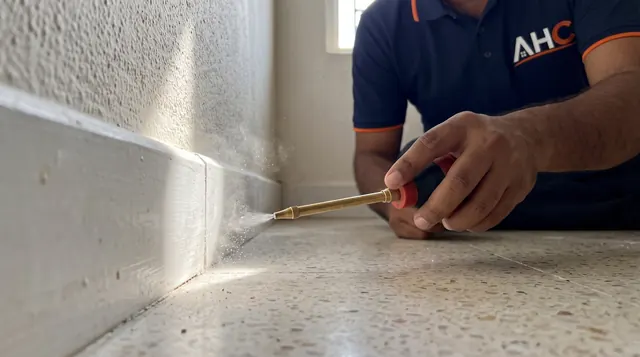
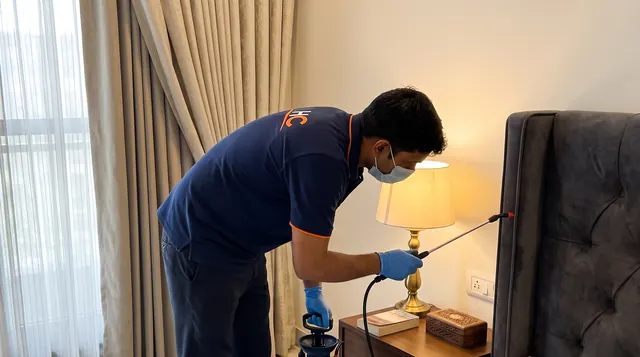
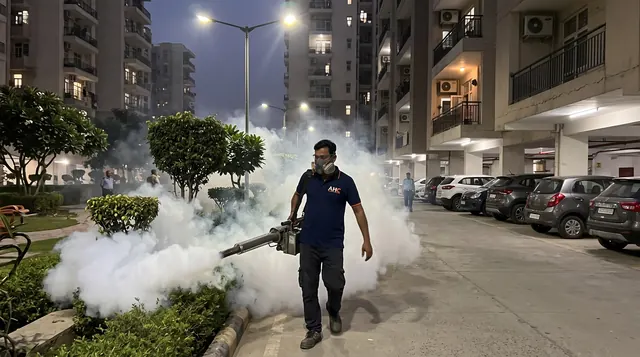
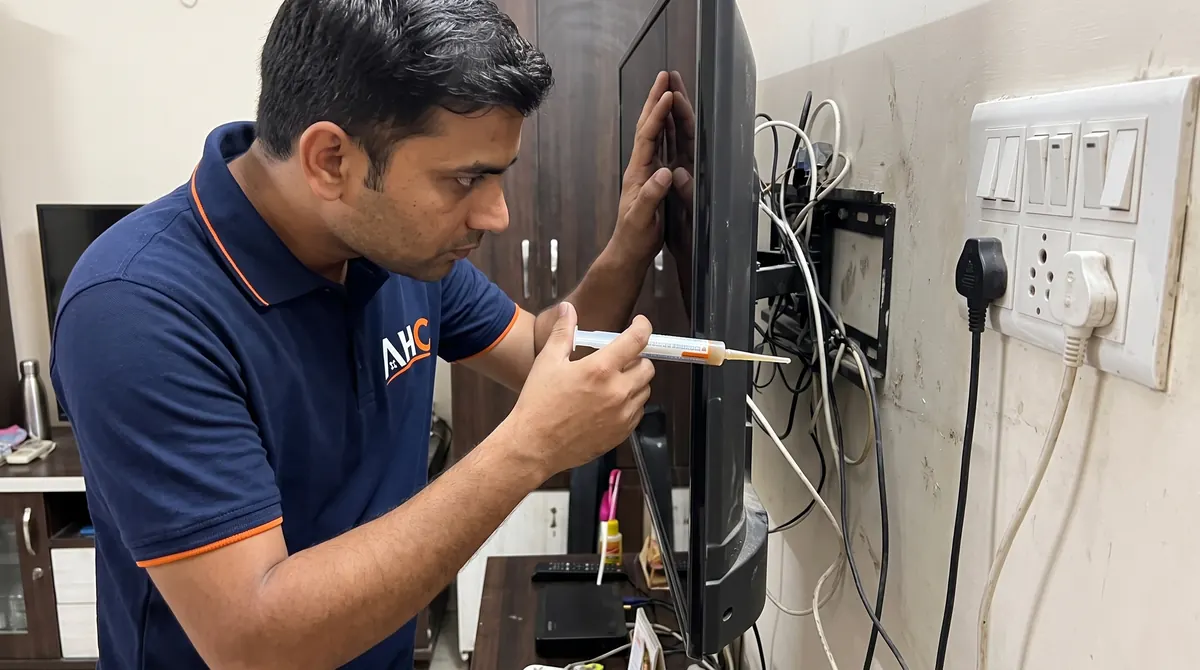
Our cockroach control visit puts odourless gel inside hinges, drawer runners, the sink cabinet and appliance gaps, and treats drains and duct openings with a residual spray. Nothing in the kitchen is emptied, and you can cook the same evening. It costs ₹999 for a 1RK, ₹1,449 for a 2BHK and ₹1,649 for a 3BHK, inclusive of all taxes. Cockroaches are covered by a 30-day warranty*.
For a light problem in a home with a newborn or pets, herbal pest control uses neem- and pyrethrum-based products, ₹1,749 for a 2BHK. Worried about any treatment around children? Read is pest control safe for kids, pets and pregnancy?
Sources
- Cockroaches: Pest Notes, UC Statewide IPM Program
- Boric Acid Fact Sheet, National Pesticide Information Center
- Naphthalene in moth balls and toilet deodorant cakes, NSW Health
- A cluster of children with seizures caused by camphor poisoning, Pediatrics (Icahn School of Medicine at Mount Sinai)
- Predictors of outcome in children with hydrocarbon poisoning receiving intensive care, Indian Pediatrics
Need this done?