Every November, a familiar call comes in from homes across Delhi NCR: "We hardly saw cockroaches all month, then we pulled the fridge out for Diwali cleaning and there were dozens." Or: "They're coming out from behind the geyser." The cockroaches didn't arrive with the cold. They were already in the house. Winter just pushes them into a few warm corners, where they are easier to find and, if you go about it right, easier to deal with.
This explainer covers why that happens, what it tells you about the size of the problem, and what to do this week.
Why do cockroaches move behind the fridge in winter?
They move there because the fridge is one of the few warm, damp, dark places left in a cold kitchen. The house cockroach in most Delhi NCR kitchens is the German cockroach: light brown, about 12–16 mm long, with two dark stripes behind the head, according to Utah State University Extension. It comes from warm climates and doesn't handle cold well. Rutgers University's extension fact sheet says that below about 15°C German cockroaches can survive but stop developing from nymphs to adults.
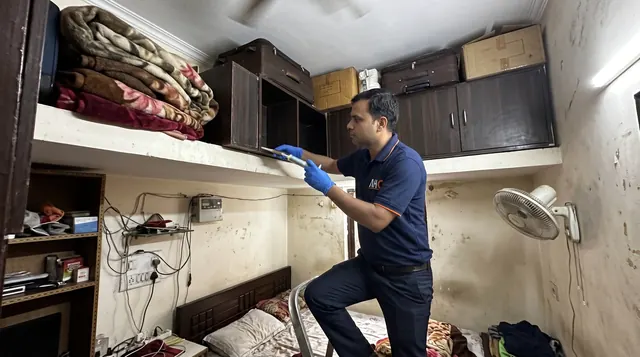
Delhi crosses that line early in winter. In 2025, the city's minimum temperature first fell below 15°C on 6 November, and Safdarjung recorded 10.4°C on 10 November, PTI reported. On those nights, open floors and outer cabinet walls get cold. The compressor and coils at the back of a fridge stay warm all night, and the drip tray underneath holds water. For a cockroach, that's food, water and heat within 30 cm.
The warm spots they pick, and why
Rutgers notes that areas around the stove and the fridge usually hold the most cockroaches, with the back of the fridge, cabinet hinges and cabinet corners as the main places to inspect. In Delhi NCR homes our technicians find the same, plus a few local favourites.
| Hotspot | Why cockroaches like it in winter | What to check |
|---|---|---|
| Back and base of the fridge | Warm compressor and coils, water in the drip tray, crumbs underneath | Pull it out; look at the grille, the motor area and the tray |
| Behind and above the geyser | Heat from the tank, bathroom humidity, wiring gaps in the wall | Gaps where the pipes and cable enter the wall; the false ceiling panel |
| RO purifier under the sink | Warm motor, constant drips, dark cabinet | Wet base of the cabinet, gaps around the drain pipe |
| Microwave, OTG, toaster | Warm body, food residue inside the vents | The vent slots and underside |
| Wi-Fi router, set-top box, inverter | Warm all day and night, rarely moved | Look under and behind; shake gently over white paper |
| Chimney and hob | Grease plus heat after cooking | Filter edges, the gap behind the hob |
| Washing machine | Warm motor after a cycle, damp drum seals | The base and back panel |
Swipe to see the whole table
What it means for you
Seeing a cluster behind the fridge in winter usually means the infestation is established, not new. A German cockroach female carries an egg case of about 40 eggs, according to Rutgers, and produces several over her life. If you're seeing nymphs (small, dark, wingless ones) alongside adults, they are breeding in the house.
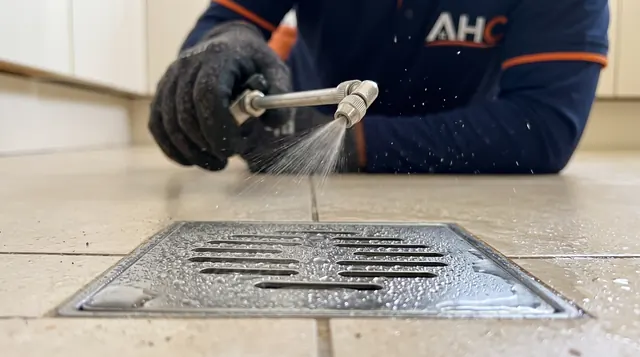
There are two pieces of good news. First, cockroaches that are crowded into a few warm spots are easier to reach with gel than cockroaches spread across the whole kitchen in summer. Second, because the cold slows their development, a treatment in November and December faces a population that's growing more slowly. Winter is a good time to get ahead of the summer spike.
It also matters for health. Rutgers notes that cockroach droppings, shed skins and dead bodies contain allergens that can trigger asthma (Rutgers). In a closed-up winter home with little ventilation, that dust stays inside. If someone at home has asthma or allergies that get worse in winter, mention it to your doctor; cockroach allergen is one of several possible triggers.
What to do this week
1. Pull out and clean (1 to 2 hours)
- Switch off and unplug the fridge, then pull it forward. Vacuum the floor, the back grille and the coils with a brush attachment. Empty and wash the drip tray if your fridge has a removable one.
- Wipe the floor and wall behind the fridge with soapy water.
- Do the same under the RO unit and inside the sink cabinet. Dry the base of the cabinet.
- Lift the microwave and the router, and wipe underneath.
- Empty the dustbin every night, not every other day.
2. Fix the water
German cockroaches need water more than food. A dripping RO drain line, a leaking sink waste pipe or a wet geyser inlet keeps a colony going all winter. Fix leaks, and don't leave water in the sink or a bucket overnight.
3. Don't spray the appliances
A shop aerosol spray aimed at the fridge motor or the geyser does two things wrong. It scatters cockroaches deeper into the appliance and wall gaps, and some sprays are flammable near electrical parts. Spraying also contaminates the bait you or a technician may put down later. Rutgers recommends bait as the preferred chemical control for German cockroaches, and advises against total-release foggers.
4. Seal what you can
Fill small gaps around pipe entries behind the geyser and under the sink with a silicone sealant. Fit a mesh or cover on the bathroom floor drain if it's open.
How a professional cockroach treatment handles warm spots
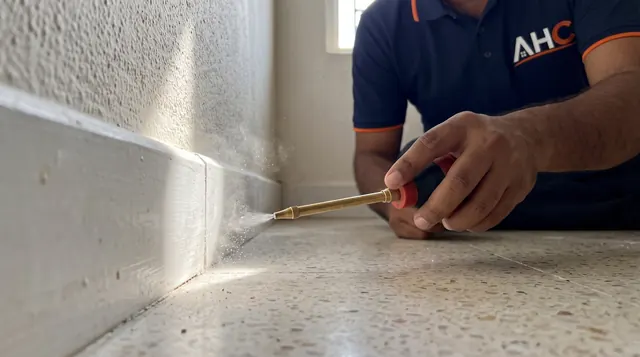
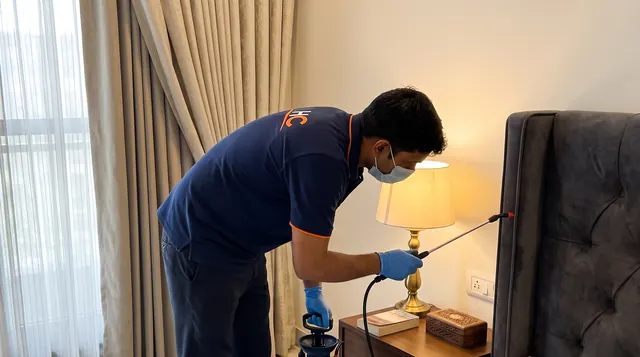
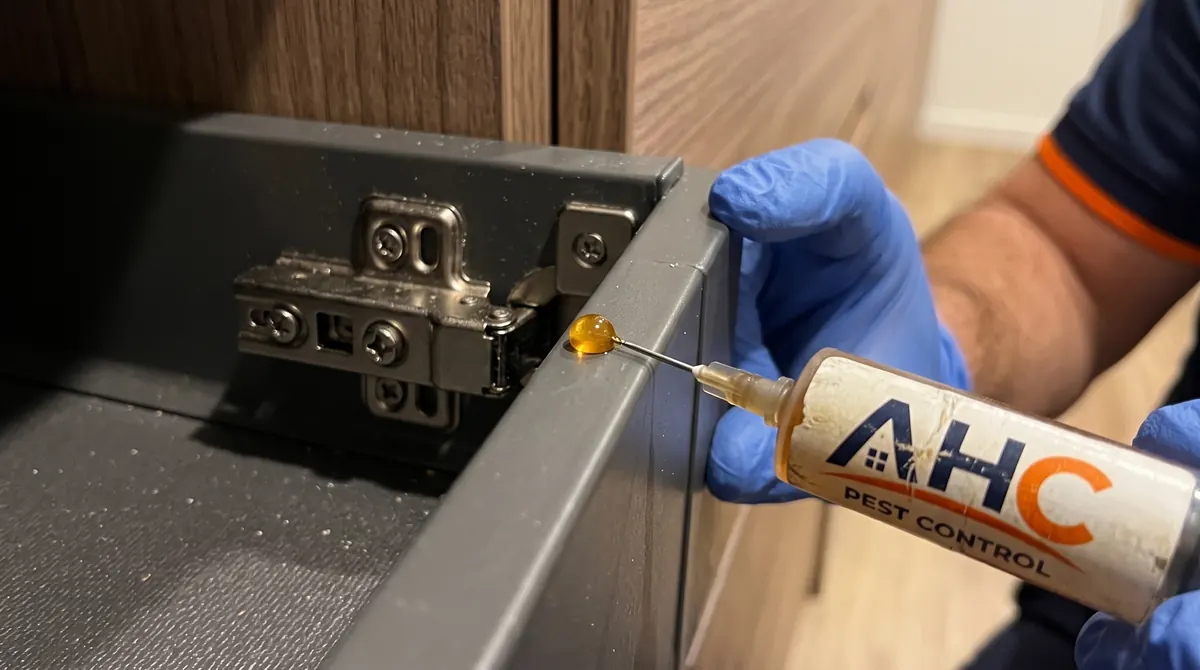
The warm spots are exactly where a treatment works best, because cockroaches feed and hide in a small area. Our technicians pull out the fridge where possible and place odourless gel in small dots in the cracks and hinge gaps around the fridge, the sink cabinet, the hob, the geyser fittings and the electrical points, never on the motor itself or on food surfaces. A targeted spray goes only along drains and skirting where needed. The kitchen can usually be used after about 2 hours with the windows open, with counters wiped before food goes back.
Prices inclusive of all taxes: 1RK ₹999, 2BHK ₹1,449, 3BHK ₹1,649. If cockroaches are still active within 30 days after treatment, we re-treat free under the 30-day warranty*, which matches the 2–4 week follow-up that Rutgers recommends. If they keep coming back after treatments elsewhere, our post on why cockroaches come back after pest control explains the usual reasons. Doing the pull-out-and-wipe steps above a day before the visit helps too: less grease and fewer crumbs means the gel has less competition. See cockroach control, or cockroach control in Noida if you're there.
When to call
Call when you see cockroaches in daylight, when you find nymphs, or when you clean behind the fridge and find more than a few. Daytime cockroaches usually mean the hiding spots are full. Treating in winter, while they're crowded into a few warm places, is easier than waiting for March.
Sources
Need this done?