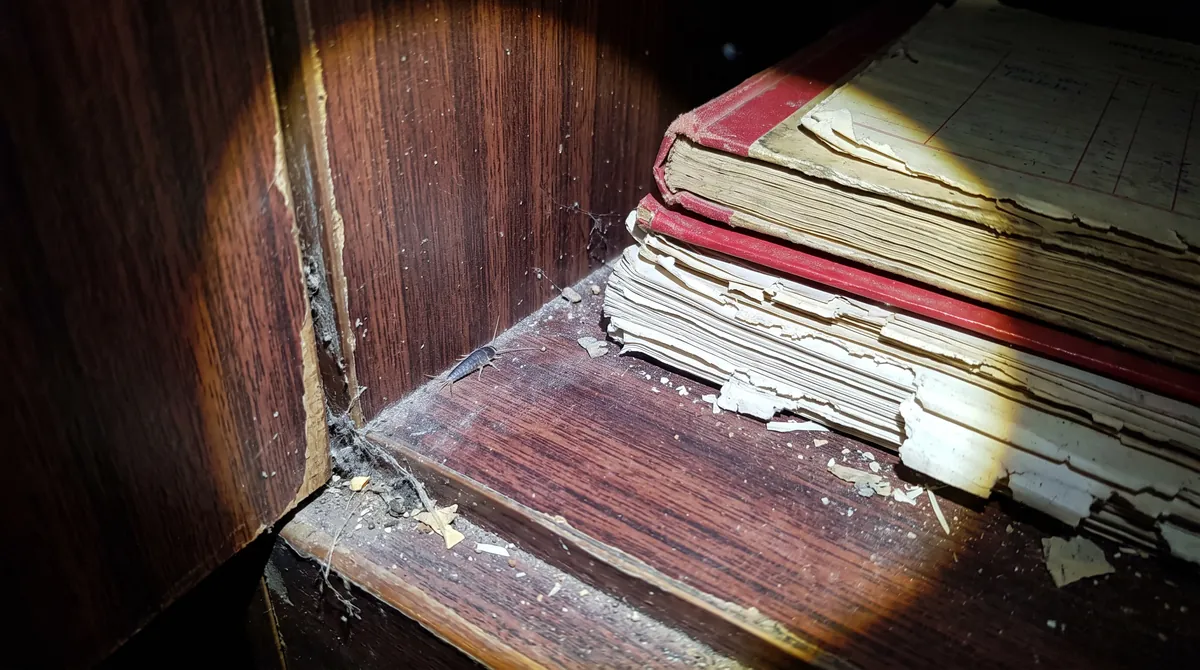
In most Delhi NCR homes the wardrobe doors stay shut from July to October. The monsoon pushes damp into plywood backs and the walls behind them, the AC is off by October, and nobody opens the saree shelf until the festival is a week away. Then the lehenga comes out with a faint musty smell, a few yellow spots, and sometimes a small silver insect that slips into a crack before you can look properly. That is almost always a silverfish.
A wardrobe clean done properly takes one to two hours per almirah. Here is how we would do it, in order, with the reasoning behind each step.
Why do wardrobes smell musty after the monsoon?
The smell is mildew: mould growing slowly on fabric, leather, paper and the wardrobe's inner panels where moisture got trapped. University of Georgia Extension notes that mildew usually starts when relative humidity stays at 60% or higher with mild temperatures, and that musty odours are typical of closed closets and clothes chests. Delhi's monsoon months sit well above that for weeks.
Three things make it worse in NCR homes:
- Wardrobes on an outer wall or a bathroom wall. On our visits, the musty almirahs are usually the ones backing onto a wall that takes rain or plumbing seepage.
- Clothes put away slightly damp. A kurta that dried indoors on a cloudy August day still holds moisture in its seams.
- No air movement. Doors shut for months and shelves packed tight leave nowhere for damp air to go.
The same damp is what silverfish need. UC IPM's silverfish guide says they favour damp, warm spots and, at higher temperatures, need relative humidity above 75%. A wardrobe that smells musty is a wardrobe silverfish can live in.
Silverfish, carpet beetles, mildew or termites: how to tell what you're seeing
Before you clean, look closely, because the damage tells you what you're dealing with. Take a phone photo of anything you find. It helps if you need a treatment later.
| What you see | Most likely cause | What it means |
|---|---|---|
| Silver-grey, tapered insect about 1–2 cm long that wriggles fast and hides | Silverfish | Damp, dusty wardrobe; feeds on starch, glue and paper |
| Irregular scraped patches or holes on papers, book covers, starched cotton or photo albums, with tiny dust-like scales nearby | Silverfish feeding | Treat the wardrobe and reduce damp |
| Clean round holes in woollens, pashmina or silk, small striped beetles or hairy brown larvae | Carpet beetles | A different pest; they eat animal fibres, not starch |
| Grey-green or black spots, white powdery film, strong musty smell | Mildew | Moisture problem; wash, dry and fix the damp |
| Thin mud lines on the back panel or wall, wood that sounds hollow or crumbles | Termites (deemak) | Not a cleaning job; get it inspected the same week |
Swipe to see the whole table
UC IPM describes silverfish damage as scraped rather than bitten, with irregular holes that spread out from one spot and fine scales or droppings close by. That scraped look is the easiest way to tell them apart from moth or beetle holes. If you're unsure about the wood itself, our guide on checking furniture for termites or wood borer walks through it.
How to clean a wardrobe, step by step
Do one wardrobe at a time, start in the morning, and keep a bedsheet on the floor to sort clothes onto.
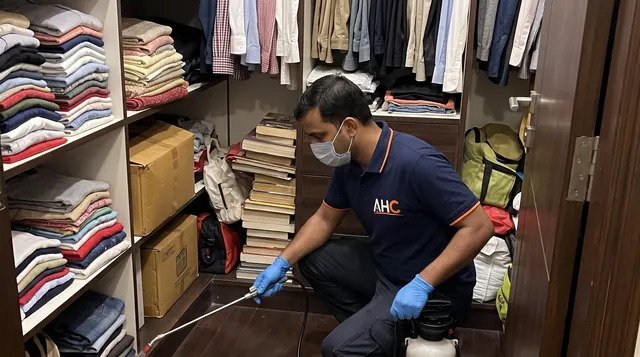
- Empty it completely (15–20 minutes). Every shelf, drawer and the loft above. Put festive clothes in one pile, daily wear in another, papers and boxes in a third.
- Inspect while it's empty (5 minutes). Use a phone torch on the back corners, the hinge side, under the bottom drawer and the gap between the wardrobe and the wall. This is where silverfish, droppings and mud lines show up.
- Vacuum top to bottom (15 minutes). Use the crevice tool on corners, drawer runners, the hinge recesses and the loft. Silverfish eat dust, hair and dead insects, so this removes their food along with any eggs in cracks. Empty the vacuum outside.
- Wipe with mild detergent (15 minutes). A cloth wrung out in water with a few drops of liquid detergent, inside and out. Don't soak laminate or plywood; water into the edges swells the board. On mildew spots, wipe, rinse the cloth, wipe again.
- Dry it properly (2–3 hours). Doors wide open, fan on, window open if the air outside is clean enough. This is the step most people skip, and it is the one that stops the smell coming back.
- Air the clothes while it dries (2–3 hours). Cotton and linen can go in the sun. Silk sarees, zari work and dark lehengas should air in shade or indoors under a fan, since direct sun fades them. Anything with mildew spots needs a wash and full drying first.
- Put back loosely. Leave a hand's width of space on each shelf so air moves. Heavy festive wear goes in breathable cotton or muslin covers, not sealed plastic, which traps damp.
A 6–7 foot two-door almirah usually takes about 1.5–2 hours including drying. Lofts above the wardrobe add 20 minutes.
What to keep in and out of the wardrobe
Small habits decide whether you are doing this again in March.
- Silica gel sachets or a moisture absorber box on each shelf, replaced or dried out when full. They help in a closed wardrobe; they won't fix a seeping wall.
- No starched clothes in long storage. Silverfish feed on starch in fabric, as UC IPM notes. Wash out starch before putting cotton sarees away for months.
- Papers out. Old bills, photo albums and books stored in the wardrobe are silverfish food. Move them to a dry shelf or a lidded plastic box.
- Neem leaves and cloves smell pleasant and many families use them. Be honest with yourself: they don't control an existing silverfish population.
- Mothballs are for moths and carpet beetles, not silverfish, and should never be within reach of children or pets.
- Open the doors once a week for half an hour, especially in the weeks after the monsoon.
When the musty smell comes back within days
If the wardrobe smells again within a week of a thorough clean, the damp is coming from the wall, not the clothes. Put your palm flat on the wall behind the wardrobe on a humid morning. If it feels cold and damp, or the paint is bubbling, it is seepage from outside, a bathroom or a pipe. Cleaning can't fix that. Pull the wardrobe a few centimetres off the wall to let air in, get the leak repaired, and watch that back panel for termite mud lines, because damp wood and soil-connected walls are what deemak looks for. Our post on the signs of termites in Delhi homes shows what to look for.
When to call a professional for silverfish
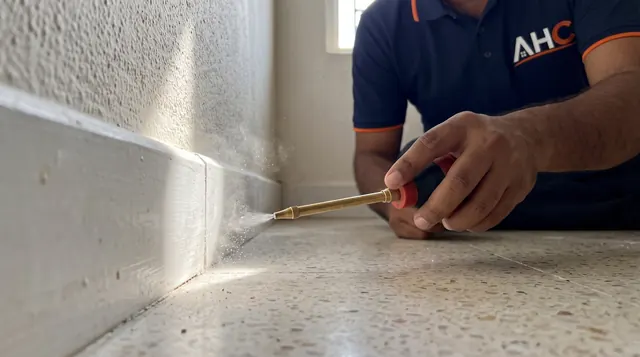
A clean takes away food and some eggs. It doesn't reach silverfish living inside the wardrobe's joints, the gap behind skirting or the cracks around the door frame. Book a treatment if you keep seeing them after a clean, if papers or clothes show fresh scraped patches, or if you find them in more than one room.
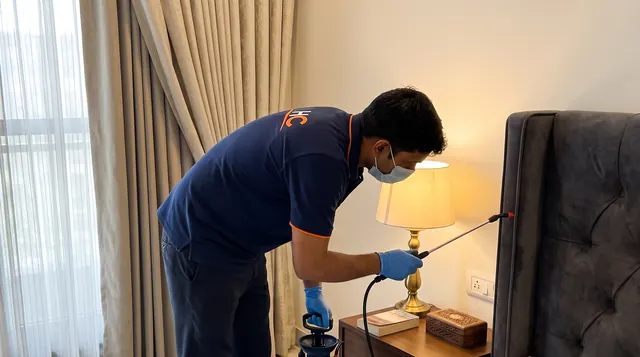
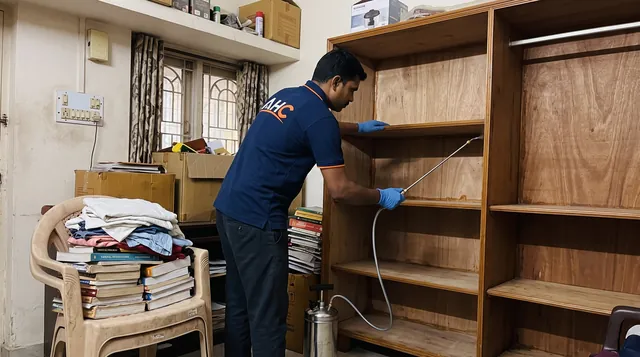
Our silverfish control treats wardrobes, bookshelves and store rooms with a targeted crack-and-crevice treatment, and takes about 30–45 minutes. It costs ₹1,099 for a 1RK, ₹1,449 for a 2BHK and ₹1,699 for a 3BHK, inclusive of all taxes. Empty the wardrobes before the visit, and the technician will tell you when the clothes can go back. Since 2011 our salaried, police-verified technicians have found that silverfish come back most often where the damp isn't fixed, so they will point out any seepage they see.
Sources
Need this done?