Picture a typical Delhi NCR living room at 8 pm on Diwali. Diyas along the windowsill and the main door. Candles on the dining table. The balcony door open so the family can watch the crackers. A mosquito coil lit under the sofa because the guests are getting bitten, a plug-in vaporiser running in the corner, and someone reaching for a shop aerosol spray when a mosquito lands on the mithai tray. Outside, the society's fogging machine might even pass along the lane.
Each of these is fine on its own, used as the label says. Together, in one closed room, they add up to two real risks: fire and smoke. Dengue season in Delhi NCR runs from August into November, so the mosquitoes are a genuine problem on Diwali night. The answer is to choose your mosquito protection with the flames in mind.
Who is most at risk on Diwali night?
The people most at risk are the ones closest to the floor, the flames or the smoke.
- Young children. A smouldering coil on the floor sits exactly at a toddler's hand height. WHO's burns fact sheet notes that children are particularly at risk from hot liquids, cooking equipment and flames (WHO).
- Anyone in a saree, lehenga, dupatta or loose synthetic clothing. Hems and dupattas sweep past diyas on the floor and coils under furniture. Synthetic fabric melts onto skin.
- People with asthma, COPD or heart disease, and older family members. The air outdoors on Diwali night is usually among the most polluted of the year in Delhi NCR. A coil indoors adds more smoke on top.
- Pregnant women and newborns. Less smoke and fewer chemicals in the air is the safer choice for both. Our guide on pest control around kids, pets and pregnancy covers this in more detail.
- Pets, especially birds. Keep pet birds well away from smoke and sprays. Dogs and cats panic at crackers and knock things over.
Delhi's hospitals see this every year. The Tribune reported 252 burn cases across five major Delhi hospitals over Diwali 2025, with Safdarjung alone recording 129, of which 11 were caused by diyas rather than firecrackers (The Tribune).
Why a mosquito coil and diyas don't belong in the same room
A mosquito coil is an ember that burns for hours. It's a small, hot, glowing tip that can light a curtain edge, a paper decoration, a rangoli border of dry flowers, or a falling dupatta. On a normal night it sits alone in a corner. On Diwali, the floor is full of other things that burn.
Then there's the smoke. A study in *Environmental Health Perspectives* by Liu and colleagues measured coil emissions and found that burning one coil releases as much fine particulate (PM2.5) as burning 75 to 137 cigarettes, and as much formaldehyde as about 51 cigarettes. The authors concluded that exposure to the smoke of such coils can pose significant acute and chronic health risks (EHP). Add the smoke from twenty diyas, candles and crackers drifting in from the balcony, and the air in a closed room gets heavy fast.
Aerosol sprays near open flames
Most shop aerosol sprays use a flammable propellant, and the can says so. Spraying one near a lit diya or candle can flash into flame. On Diwali night the rule is simple:
- Put out every flame in the room first.
- Spray, following the label.
- Leave the room and close the door for the time the label gives.
- Open the windows to air it out before you relight anything.
If that's too much trouble mid-party, don't spray at all. Use a fan and a vaporiser instead.
Which mosquito method is safest with diyas around?
| Method | Fire risk near diyas | Smoke or chemical in the air | How to use it on Diwali night |
|---|---|---|---|
| Window and door mesh (jaali) | None | None | Best option; close mesh doors once the diyas are lit |
| Ceiling or pedestal fan | None | None | Mosquitoes are weak fliers; a fan on the seating area helps |
| Plug-in liquid vaporiser | Low | Low | Fine away from curtains, out of children's reach |
| Mosquito coil | High: open ember | High: smoke and fine particles | Only outdoors, on its metal stand, well away from diyas and walkways |
| Shop aerosol spray | High: flammable propellant | High for a short time | Only with all flames out and the room empty |
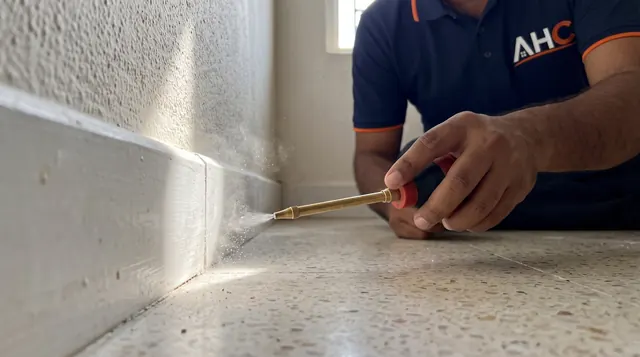
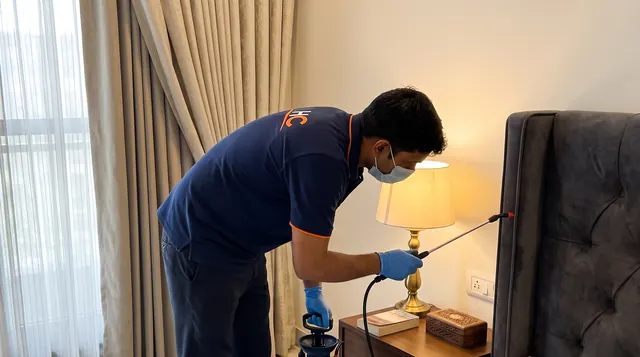
| Professional indoor treatment | None on the day | None on the day | Book 2–3 days before Diwali so rooms are aired well in advance |
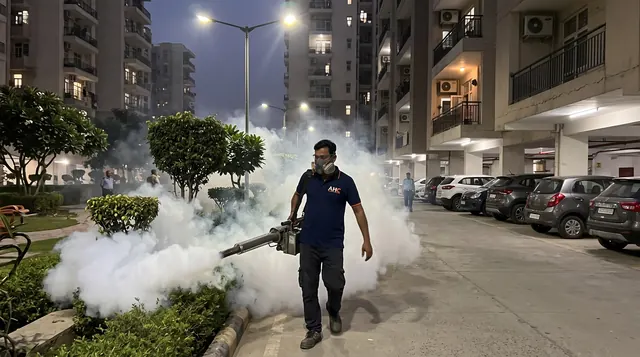
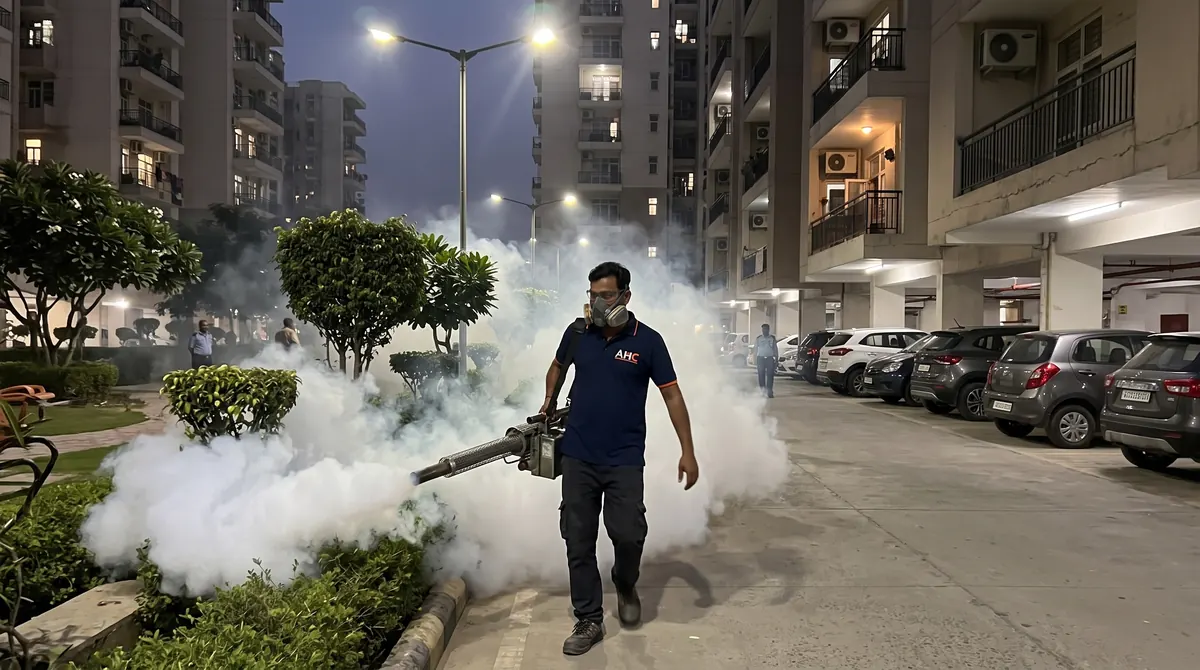
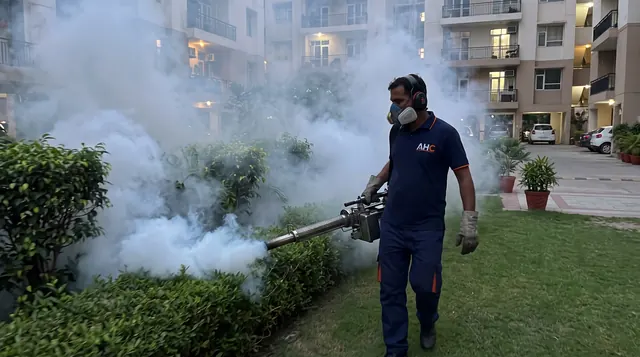
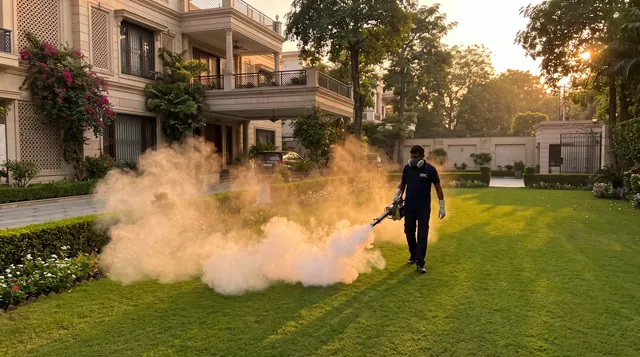
| Fogging (ULV or thermal) | Keep all flames away | Short-term mist | Never on Diwali night; schedule it days before |
Swipe to see the whole table
What to do instead: a safer plan for the night
A few days before Diwali - Empty and scrub cooler trays, flower-pot plates, AC trays and the fridge drip tray. Our dengue season checklist lists the usual breeding spots. - Fix torn window mesh. - If mosquitoes are bad, book a treatment now, not on the day.
On Diwali evening - Place diyas on a metal plate or tray, on a stable surface, away from curtains, doorways and where people walk. - Keep one bucket of water and one thick cotton bedsheet ready near the balcony. - If you must use a coil, use it outdoors on the balcony floor on its stand, away from diyas and children, and put it out before you go inside. - Run a vaporiser in the bedrooms, not the coil, and switch it off once the family goes to sleep with the windows shut and mesh in place. - Keep pets and pet birds in a quiet back room, away from the smoke.
After the crackers - Put out every diya and candle before bed. A diya left burning by a window overnight is how many small fires start. - Air the room for 10–15 minutes once the cracker smoke outside thins out.
If there's a burn: first aid and when to see a doctor
WHO's first-aid advice for burns is to stop the burning, remove clothing from the area if it isn't stuck, and cool the burn with cool running water, then cover it with a clean cloth. Don't apply ice, oil, butter, haldi, toothpaste or any traditional paste, and don't burst blisters (WHO). NHS guidance adds: cool it under cool or lukewarm running water for 20 minutes (NHS 111 Wales).
Go to a doctor or hospital straight away if:
- The burn is bigger than the person's hand, or on the face, hands, arms, feet, legs or genitals.
- The skin looks white or charred, or clothing has stuck to it.
- The person is a child under 10, pregnant, older, or has a heart, lung or liver condition, diabetes or weak immunity.
- Someone breathed in smoke and has a hoarse voice, coughing, a sore throat or trouble breathing (NHS 111 Wales).
Other symptoms that need medical attention:
- Headache, dizziness, nausea or breathlessness after a spray or coil in a closed room: move to fresh air. If it doesn't settle quickly, see a doctor.
- An asthma attack that doesn't respond to the person's usual plan from their doctor: get help without waiting.
- A child who has chewed a coil or swallowed vaporiser liquid: go to a hospital emergency immediately and take the pack with you. Don't try to make the child vomit (NHS).
This is general safety information, not medical advice. When in doubt, call a doctor.
When to book mosquito control, and what it includes
If mosquitoes are biting every evening, a home treatment a few days before Diwali is safer than a room full of coils on the night. Our mosquito control visit combines an indoor residual spray on the spots where mosquitoes rest (behind curtains, under furniture, dark corners) with larvicide on outdoor standing water, and a check of every breeding spot around the home. It takes about 45–60 minutes. It costs ₹1,449 for a 1RK, ₹1,899 for a 2BHK and ₹2,299 for a 3BHK, inclusive of all taxes. Mosquito treatment reduces numbers on the spot; new mosquitoes can still fly in from outside.
For a quick indoor knockdown before guests arrive, cold ULV fogging is ₹1,199 for a 2BHK inclusive of all taxes. We fog with people and pets out of the room and windows closed, then air it out, so book it at least a day before the diyas come out. Our salaried, police-verified technicians have been doing this across Delhi NCR since 2011, and on festival weeks they will always ask what's being lit in the room before they start.
Sources
Need this done?