It happens in so many Delhi NCR homes that it might as well be on the festival calendar. Diwali goes well, the guests leave, and five or six days later someone switches on the kitchen light at midnight and sees cockroaches (cockroach, or tilchatta, तिलचट्टा) running from the counter where the sweet boxes were stacked. Sometimes they're small, light-brown ones near the microwave. Sometimes it's a big reddish one from the sink.
They didn't appear from nowhere. The week after Diwali puts together everything cockroaches look for, and the timing makes sense once you know how they live.
What attracts cockroaches into a home?
Cockroaches are attracted by three things: food, water and a dark, tight place to hide close to both. UC IPM's quick guide puts it plainly: even small crumbs or spilled liquid draw them, and piles of paper and cardboard boxes give them shelter. A normal kitchen has some of this. A kitchen in the week after Diwali has all of it, in quantity.
Why it happens a week after the sweet boxes
There are four reasons, and in most homes more than one is at work.
1. More food, left out for longer. Mithai boxes sit on the dining table, the fridge top and the kitchen loft for days. Every box leaks a little: sugar syrup from gulab jamun, ghee from besan laddoo, crumbs from soan papdi, dry-fruit dust. Cockroaches that were already living quietly behind the fridge or inside the sink cabinet now find food every night. Within days their activity jumps, and you start seeing them.
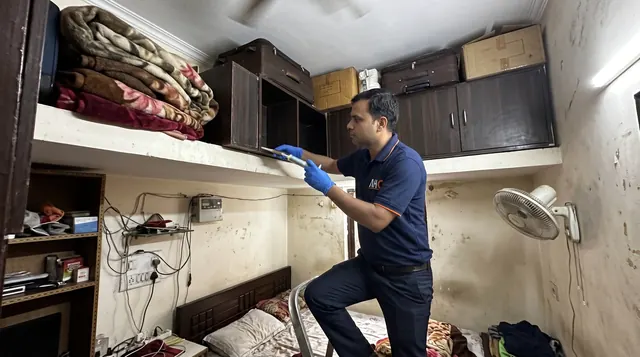
2. Cardboard: the perfect hiding place. The corrugated layers inside sweet boxes, gift hampers and delivery cartons are exactly the narrow, dark gaps cockroaches like. UC IPM's pest note says German cockroaches can squeeze into cracks about 1/16 inch (under 2 mm) wide. A stack of "good boxes kept for next year" in the loft becomes a shelter right next to the food.
3. Boxes that carry cockroaches in. UC IPM lists boxes and items recently in storage among the ways cockroaches get into buildings. Sweet shops, warehouses and delivery vans all have storerooms. A box that sat in one can bring in an adult or an egg case.
4. The egg case clock. This is why it's often "a week later". A German cockroach female carries her egg case, which holds about 30 young, for most of an incubation of about a month and drops it only a day or two before hatching, according to UC IPM. A female that arrives in a box, or was already in the kitchen, can produce a batch of nymphs within days. Those tiny, dark nymphs near the sink are often the first thing families notice.
Cooler November nights add to it. UC IPM notes German cockroaches favour warm, humid spots near food, and as the weather turns, the warmest places in a flat are the fridge motor, the back of the microwave, the water purifier and the gas stove area. On our visits in November, that is where our technicians usually find the clusters.
Which cockroach are you seeing?
What it looks like tells you where it came from and what will work.
| What you see | Most likely species | Where it's coming from | What it means |
|---|---|---|---|
| Small (1–1.5 cm), light brown with two dark stripes behind the head, in the kitchen | German cockroach | Living and breeding inside: behind appliances, in cabinet hinges, in cardboard | Needs treatment; they multiply fast indoors |
| Tiny dark nymphs, no wings, near the sink or stove | German cockroach young | A recently hatched egg case nearby | Breeding is already happening in the kitchen |
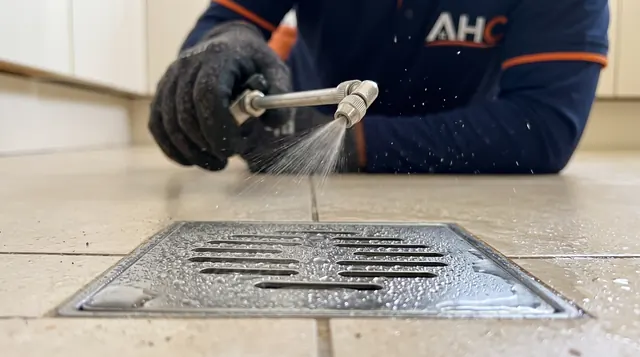
| Large (3–4 cm), reddish-brown, appears at night from the drain or bathroom | American cockroach | Drains, sewers, shafts and outdoor areas | Seal drains and gaps; common on ground floors |
| A light-brown capsule, about 6 mm, in a box or cabinet corner | German cockroach egg case | Dropped by a female shortly before hatching | Remove it and check the area |
| Cockroaches seen in daylight | Either | A large population with crowded hiding spots | Book a treatment now |
Swipe to see the whole table
UC IPM also notes the reproductive speed of German cockroaches: one female and her offspring can produce over 30,000 individuals in a year under good conditions. That's why a few small ones in November shouldn't be ignored until the summer.
What it means for your home
Seeing cockroaches after Diwali doesn't mean your home is dirty. It means the conditions changed for a couple of weeks. But it does mean one of two things:
- Larger American cockroaches at night: they're mostly visitors from drains and outside. Fixing entry points and keeping food sealed is often enough.
- Small German cockroaches or nymphs in the kitchen: they're living with you now. Cleaning alone rarely ends it, because they breed inside cabinet joints and appliance backs you can't reach.
What to do this week
Tonight - Move every sweet and dry fruit out of cardboard into airtight steel or glass containers, or into the fridge. - Flatten all empty sweet boxes, gift boxes and delivery cartons and put them out with the waste. Don't keep them in the loft. - Wipe the counter, the fridge top and the dining table with soapy water to remove syrup and crumbs. - Leave the sink empty and the platform dry overnight. Water is as important to them as food.
This week - Open new boxes on the balcony or at the door, not in the kitchen. - Pull the fridge and microwave forward and clean behind them. Look for droppings like ground pepper, egg cases and nymphs. - Close drain covers at night and fill gaps around pipes under the sink. - Keep the kitchen dustbin lidded and empty it nightly.
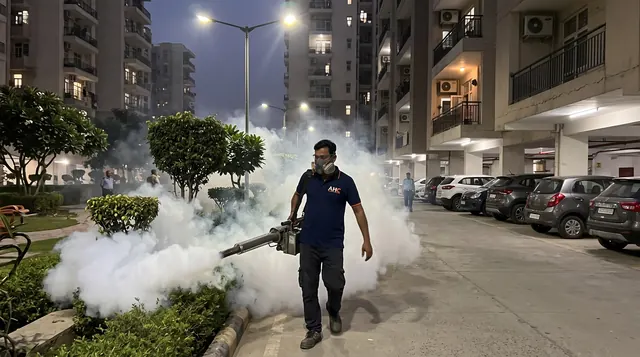
What not to do - Don't fill the kitchen with a shop aerosol spray. UC IPM's guidance is that sprays don't give long-term control and that aerosols and foggers can scatter cockroaches without killing them, pushing them deeper into walls and into other rooms. - Don't wipe gel spots if your home had cockroach treatment before Diwali. Our guide to why cockroaches come back after pest control explains how wiping or deep cleaning removes the gel.
If ants have found the sweet boxes too, the same food steps help; persistent trails along the skirting usually need ant control.
When to call a professional, and what treatment includes
Call when you see cockroaches in daylight, see nymphs, find them in more than one cabinet, or they're still there a week after you've sorted the food and cardboard. UC IPM recommends gels and bait stations placed near hiding spots, together with sanitation, over sprays, and notes that results can take 7 days or more.
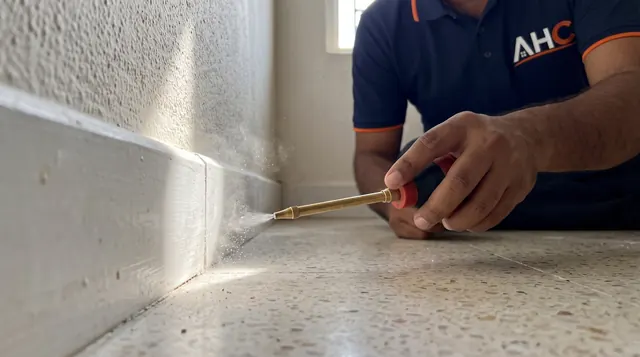
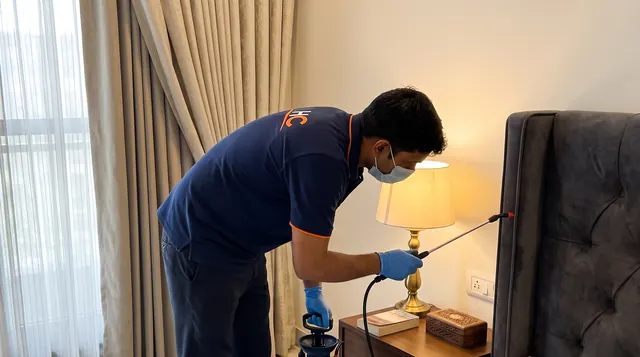
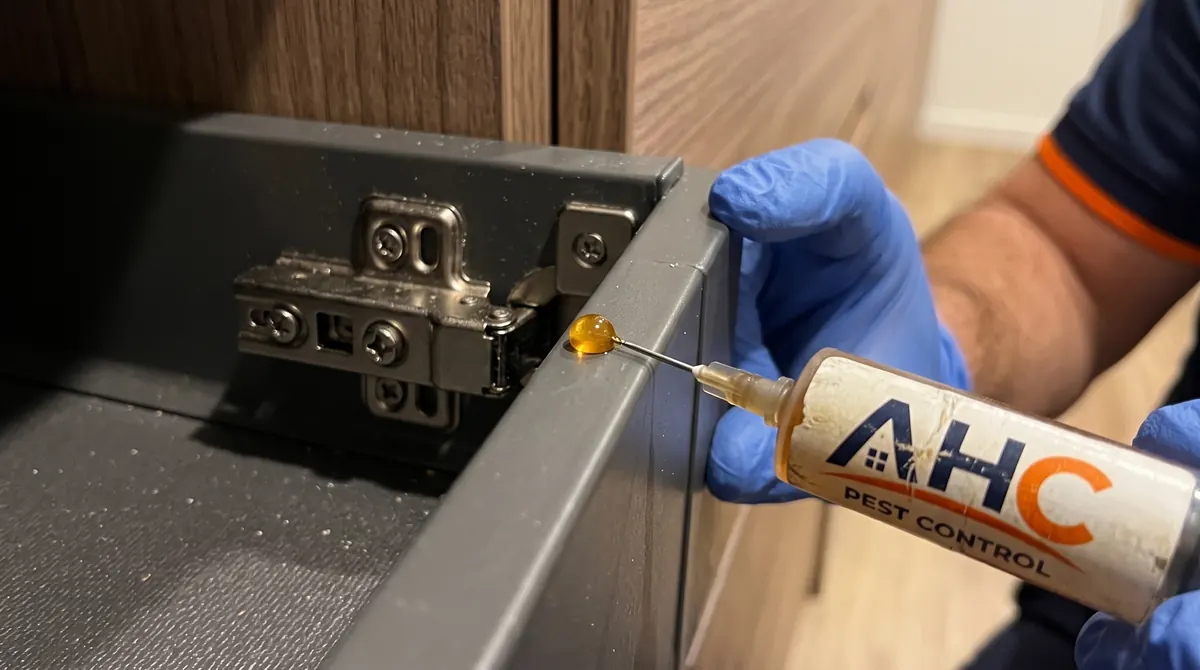
That's the basis of our cockroach control. The technician places an odourless gel (fipronil 0.05% gel, CIB&RC-registered, used as per label) in hinges, cabinet corners, behind appliances and under the sink, and adds a crack-and-crevice spray where cockroaches travel. A visit takes about 45–60 minutes. Before it, empty the cabinets and drawers that will be gelled, since our team doesn't move your utensils or food, and keep pets out of the kitchen while the gel goes in. It costs ₹999 for a 1RK, ₹1,449 for a 2BHK and ₹1,649 for a 3BHK, inclusive of all taxes. If cockroaches are still active within 30 days after treatment, we come back for a 30-day warranty*.
For prices across other pests, see our pest control cost guide. Our salaried, police-verified technicians have treated Delhi NCR kitchens since 2011, and in November the first thing they'll ask is where the sweet boxes went.
Sources
Need this done?