The call usually goes like this: "We got the bed sprayed, the bites stopped for a week, and now they're back." The spray did its job on the bed bugs it touched. What it didn't deal with were the eggs, glued into mattress seams and bed-frame joints, which kept hatching for days after the technician left. A quick surface spray fails for a reason that has nothing to do with the chemical. It's a matter of where it goes and how long it lasts.
What a surface spray leaves behind
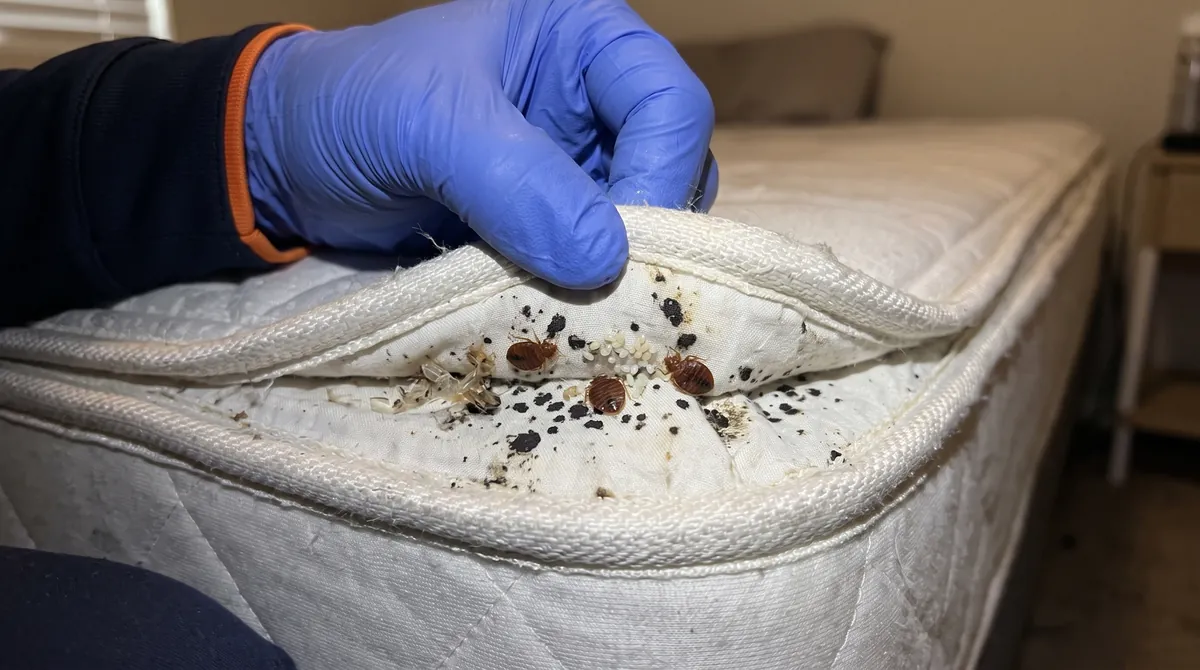
A female bed bug lays eggs in small batches after each blood meal. The Virginia Department of Health's 2024 bed bug biology sheet puts it at 1 to 7 eggs a day for about 10 days after a single meal, and about 140 eggs over her lifetime. The eggs are tiny, pale and stuck in place: Kansas State University's extension guide notes they stay attached to surfaces long after the nymphs have hatched.
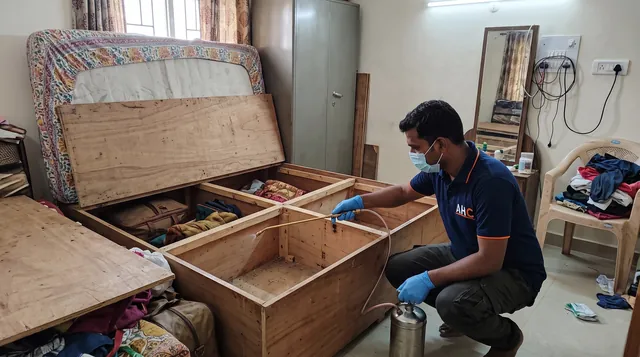
So on the day of treatment, a bedroom with an active infestation holds three things: adults, nymphs at different stages, and eggs laid over the last week or so that haven't hatched yet. Treatment reaches the bugs in seams, joints and cracks. The eggs are the part that carries on.
The hatching clock
Extension entomologists have measured how long eggs take. Virginia Tech's guidance, repeated in the Virginia Department of Health sheet, says that at room temperature, above about 21°C, roughly 60% of eggs hatch by day 6 and more than 90% by day 9. Cooler rooms slow this down by several days. Texas A&M AgriLife Extension also advises a second treatment after about 10 days, to kill the just-hatching nymphs.
Once out of the egg, a nymph has to grow through five stages before it's an adult, and it needs a blood meal before each moult. Oklahoma State University's extension notes say this, as does the University of California's IPM programme. Under good conditions, Virginia Tech puts egg-to-adult at about 37 days.
| Day after treatment | What is happening |
|---|---|
| Day 0 | Treatment. Adults and nymphs in the treated seams and joints are hit, and a residue is left behind. Recently laid eggs are still sealed. |
| Day 6 | About 60% of those eggs have hatched at room temperature. The new nymphs look for a meal. |
| Day 9 | More than 90% have hatched at room temperature. |
| Day 10–14 | Stragglers hatch, especially in a cool room in December or January. |
| By day 14 | Almost every egg has hatched, and the nymphs have been crossing the treated, residue-coated seams since they emerged. |
| From around day 30 | The residue needs to stay active through this window so hatchlings never reach adulthood — which is why the work is warranted for 6 months*. |
Swipe to see the whole table
Why a lasting residue, not a repeat spray
A single wet spray that dries in a day only kills what it touches. The eggs hatch over the following week or two, after it has dried, so a spray that leaves nothing behind misses them — the real reason a quick job fails.
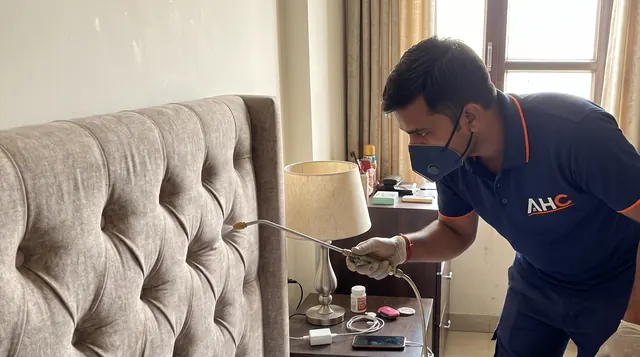
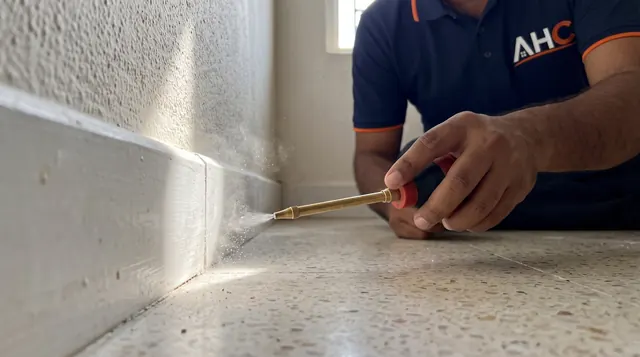
Our treatment is built around that. The products are worked into the mattress seams, bed-frame joints, screw holes and skirting cracks where bed bugs shelter and travel, and they leave a residue that keeps killing the nymphs as they hatch, right through the 6–14 day window when most eggs come out. The oldest nymphs are still weeks from adulthood, so none breeds before the residue reaches it.
That is why one thorough treatment clears the cycle, and why we back it with a written warranty of 6 months* instead of a repeat spray.
What the treatment covers
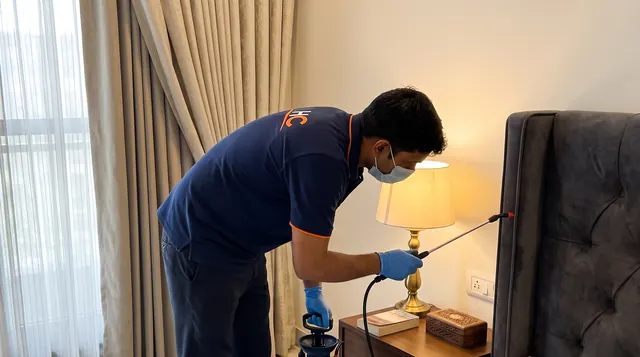
The technician treats where bed bugs hide in the day, within a few metres of where people sleep or sit: mattress seams and piping, the joints and screw holes of the bed frame, the headboard, folds of sofas and curtains, cracks in skirting, and around switchboards and photo frames near the bed. We use imidacloprid 21% + beta-cyfluthrin 10.5% SC, thiamethoxam 25% wg, CIB&RC-registered and used as per the label. The room is usable again after 3–4 hours of airing.
| Home size | Price (inclusive of all taxes) | Time |
|---|---|---|
| 1RK | ₹1,599 | 60–75 min |
| 1BHK | ₹2,299 | 60–90 min |
| 2BHK | ₹2,999 | 75–90 min |
| 3BHK | ₹3,799 | 90–120 min |
| 4BHK | ₹4,599 | 2–2.5 hours |
| 5BHK+, villa | Price after a free visit | Confirmed at the visit |
Swipe to see the whole table
Your part: the 60°C wash
Heat reaches eggs inside fabric folds that a technician can't treat one by one. Before the treatment:
- Wash sheets, pillow covers, blankets, curtains and the clothes from the affected rooms at 60°C, or the hottest the fabric allows.
- Then give them 30 minutes in the dryer on hot or in strong sun. Kansas State's guide also lists the tumble dryer on its hot cycle, for at least 30 minutes, as a way to heat-treat infested fabric.
- Seal the clean items in bags until the room has aired, so they don't pick up hatchlings.
- Clear everything stored under the bed and empty the bedside drawers.
- Vacuum mattress seams and the bed frame, and empty the vacuum into a sealed bag outside.
After the treatment, keep sleeping in your own bed. If you move to the sofa or another room, the bugs follow you and the infestation spreads to untreated furniture. In your own bed, the hatchlings come out across the treated, residue-coated seams and joints.
You don't need to throw the mattress away
This is the most expensive mistake we see. A mattress with intact fabric is treated along its seams and piping, the same as the bed frame. Buying a new one halfway through only gives the hatchlings a fresh, untreated home. Kansas State's guide notes that mattress encasements are designed to trap any bed bugs left inside, where they eventually die; if you want one, fit it a couple of weeks after the treatment.
The warranty: 6 months*
Once the prep list was followed, the treatment carries a warranty of 6 months*. If bed bugs come back in the treated rooms during that time, we re-treat free. One thing falls outside it: bed bugs brought in later from travel, guests or second-hand furniture, which is a new infestation.
Why a quick surface spray fails twice over
A quick surface spray only wets visible surfaces and dries within a day, leaving no residue in the seams and joints. It misses the timing problem above completely. Kerosene, phenyl and shop sprays on the bed miss it too, and kerosene on a mattress is a fire and health risk in a bedroom: the US EPA warns that kerosene, rubbing alcohol and petrol could harm your family and can easily ignite with a spark or a cigarette (EPA). If you have already tried one of these, tell the technician at the visit, so the inspection covers the nearby furniture and wall cracks as well as the bed.
How to check in the weeks after
- Once a week, run a phone torch along the mattress piping, the bed-frame joints and the headboard. Texas A&M's description is a good guide: nymphs are pale just after each moult and turn brownish as they harden.
- Wipe the old dark spots off the seams after the treatment, so any new ones stand out.
- A few shed skins in the first week or two are expected, because hatchlings moult as they grow. Fresh bites after that are not.
- Not sure what you're looking at? Send a close-up photo on WhatsApp to 97111 11086 before you buy anything or move any furniture.
After the treatment
- Keep washing bedding hot once a week for a few weeks.
- After any trip, unpack on a hard floor, not on the bed, and wash travel clothes hot.
- Check second-hand beds, sofas and mattresses before they come through the door.
Bed bugs don't mean a home is dirty. A spotless flat can get them from one suitcase. What decides the outcome is a thorough treatment that leaves a residue where the bugs travel.
Read more: Bed bug treatment in Delhi · in Gurugram · in Noida · in Ghaziabad · in Faridabad
Sources
Need this done?